Our Short List of 3

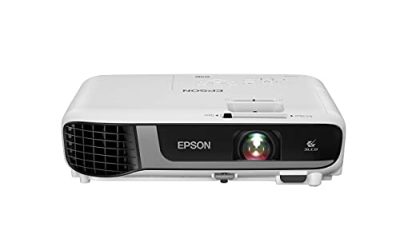
- Display technology: 3-chip 3LCD
- Resolution: 4K PRO-UHD (pixel shifting), HDR10 and HLG
- Brightness: 2,800 lumens color and white brightness
- Contrast ratio: up to 35,000:1

- Display technology: DLP, native 1920 x 1080
- Light source: LED, up to 30,000 hours in Eco mode
- Brightness: 2,300 ANSI lumens
- Contrast ratio: 500,000:1 with light source dimming
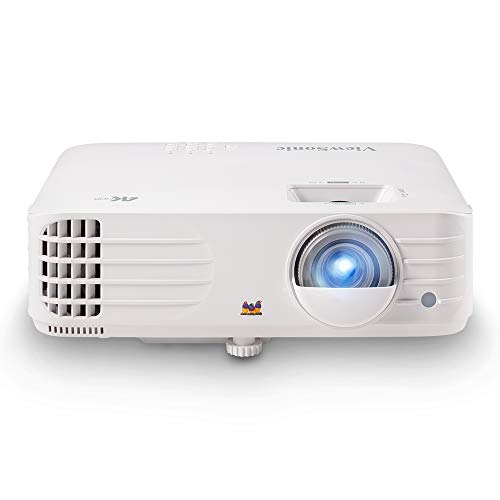
- Display technology: DLP, 4K UHD (pixel shifting)
- Brightness: 3,200 ANSI lumens
- HDR: HDR support
- Gaming: 240Hz at 1080p, 4.2ms input lag
All 4 Picks at a Glance
| Product | Specs | Action |
|---|---|---|
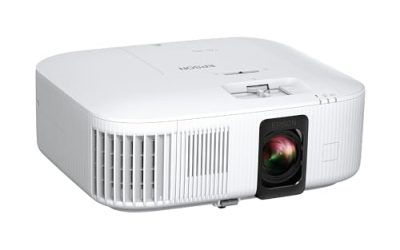
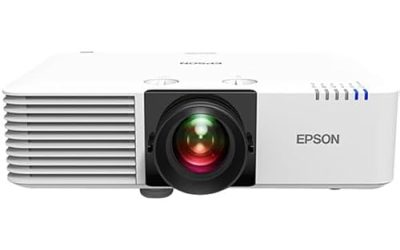
| Epson Home Cinema 2350 4K PRO-UHD Smart Streaming Projector |
| Check price on Amazon |
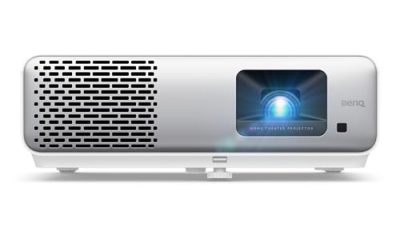
| BenQ HT2060 1080p HDR LED Home Theater Projector |
| Check price on Amazon |
| ViewSonic PX701-4K UHD Home Theater Projector |
| Check price on Amazon |
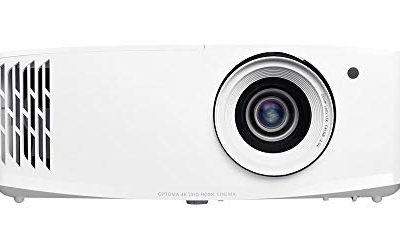
 Optoma HD146X 1080p Home Theater Projector |
| Check price on Amazon |
Key takeaways
- Compare the best home projectors for movies, sports and gaming on resolution, brightness, throw and input lag, with setup tips for rooms of any size.
A home projector turns an ordinary wall into the largest screen in the house, but the gap between a good one and a frustrating one comes down to a short list of published numbers: native resolution, brightness in lumens, throw distance, light source life, and input lag for anyone who games. The four models below are the home theater projectors that cover those numbers most completely, from a 3LCD streaming model with 4K PRO-UHD processing to an LED 1080p unit built around color accuracy, a 4K gaming projector with a 240Hz mode, and a bright lamp-based 1080p machine for lights-on viewing.
Every figure in the product sections is the maker’s published specification for that exact model: resolution as the maker states it, brightness as the maker measures it, and the lens, input and audio details from the maker’s own listing. Projector brightness and contrast figures are not measured the same way by every brand, so the buying guide further down explains how to read each number before comparing across brands. Match the throw distance to your room first, then the brightness to your lighting, and the rest of the decision gets much simpler.
Epson Home Cinema 2350 4K PRO-UHD Smart Streaming Projector
- Display technology: 3-chip 3LCD
- Resolution: 4K PRO-UHD (pixel shifting), HDR10 and HLG
- Brightness: 2,800 lumens color and white brightness
- Contrast ratio: up to 35,000:1
The Epson Home Cinema 2350 is the streaming-first pick in this roundup. It uses Epson’s 3-chip 3LCD design, which projects the red, green and blue channels through three separate chips at the same time, and pairs it with 4K PRO-UHD processing that shifts the pixels to put a 3840 x 2160 addressable image on screen from 1080p panels. Epson publishes 2,800 lumens of both color brightness and white brightness, a figure that matters because 3LCD designs hold their color brightness at the same level as their white output, so sports and animated films keep their saturation in rooms that are not fully dark.
The smart side is handled by built-in Android TV, which puts the major streaming apps on the projector itself with no separate stick or box to plug in, and the 10W built-in speaker covers casual viewing without an external sound system. Bluetooth output lets the projector send audio to a wireless speaker or headphones when the room layout makes a cable run awkward. HDR10 and HLG support cover the two broadcast and streaming HDR formats, and the low-latency processing keeps the 2350 in play for gaming alongside movie nights.
Placement is conventional long-throw, so this is a projector for a coffee table, a rear shelf or a ceiling mount in a room with some depth to it. Buyers who want one machine that handles streaming, sports and films with no extra hardware in the chain will find the 2350 the most self-contained option here.
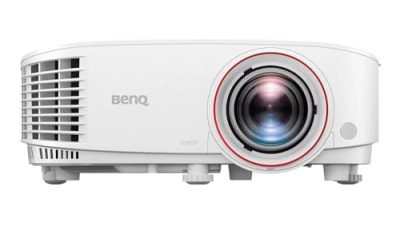
BenQ HT2060 1080p HDR LED Home Theater Projector
- Display technology: DLP, native 1920 x 1080
- Light source: LED, up to 30,000 hours in Eco mode
- Brightness: 2,300 ANSI lumens
- Contrast ratio: 500,000:1 with light source dimming
The BenQ HT2060 takes the opposite approach to the Epson: instead of chasing pixel counts, it pairs a native 1920 x 1080 DLP chip with an LED light source and tunes the whole machine around color. BenQ publishes 2,300 ANSI lumens, coverage of 98% of the Rec.709 gamut with DCI-P3 support, and a contrast figure of 500,000:1 with light source dimming. In practice that combination is aimed squarely at film viewing in a darkened room, where shadow detail and accurate skin tones matter more than raw brightness, and the LED source holds its color balance far longer than a lamp does as the hours add up.
The LED light source is also the practical headline. BenQ rates it for up to 30,000 hours in Eco mode, which removes lamp replacements from the ownership picture entirely for most households, and the projector reaches full brightness almost instantly at switch-on. The lens offers a 1.3x zoom with vertical lens shift, a genuinely useful combination at this level because the shift lets you align the image to a fixed screen without tilting the projector and reaching for digital keystone correction. Two-dimensional keystone is still on board for rooms where perfect placement is not possible.
Gamers are not left out. BenQ publishes an input lag of 8.3ms at 1080p and 120Hz, and 16.7ms at 1080p and 60Hz, both quick enough that the projector keeps up with fast titles. Twin 5W chamber speakers, two HDMI 2.0 inputs, an S/PDIF output for a soundbar or receiver, and full 3D support round out a specification that reads like a checklist for a dedicated movie room.
ViewSonic PX701-4K UHD Home Theater Projector
- Display technology: DLP, 4K UHD (pixel shifting)
- Brightness: 3,200 ANSI lumens
- HDR: HDR support
- Gaming: 240Hz at 1080p, 4.2ms input lag
The ViewSonic PX701-4K is the gaming specialist of the four. Its DLP engine produces a 4K UHD image by pixel shifting, rated at 3,200 ANSI lumens, and for players it adds a 1080p mode running at 240Hz with a published input lag of just 4.2ms. That combination is rare in the home theater class: the same machine that shows films at 4K on movie night can drop to a high-refresh, low-lag mode that keeps fast camera movement in shooters and racing titles feeling immediate on a screen measured in feet rather than inches.
ViewSonic publishes an image size range that runs up to 300 inches, with HDR support and auto vertical keystone correction to square the picture when the projector sits slightly off axis. Dual HDMI inputs cover a console and a streaming device or Blu-ray player without cable swapping. The lamp is rated for up to 20,000 hours in SuperEco mode, which stretches the interval between lamp changes well beyond the figures lamp projectors managed a few years ago.
The PX701-4K makes the most sense in a mixed-use room: bright enough at 3,200 lumens to hold a watchable picture with some ambient light in the room, sharp enough for 4K film content, and faster than almost anything else in its class when a console is connected. Buyers building a mixed movie and gaming setup around one projector should start here.
Optoma HD146X 1080p Home Theater Projector
- Display technology: DLP, native 1920 x 1080
- Brightness: 3,600 lumens
- Contrast ratio: 25,000:1
- Gaming: Enhanced Gaming mode, 16ms response time
The Optoma HD146X is the brightness-first 1080p option. Optoma publishes 3,600 lumens from its single-chip DLP engine, the highest figure in this roundup, which makes it the natural pick for living rooms where the curtains stay open and the lights stay on for sports. Native resolution is 1920 x 1080 with a published contrast ratio of 25,000:1, and the lamp is rated for up to 15,000 hours in Dynamic mode, so the running commitment stays modest for a lamp design.
Gaming gets its own dedicated support. The Enhanced Gaming mode publishes a 16ms response time at 1080p, which keeps the HD146X responsive enough for console play on a very large screen, and the projector supports 3D content from Blu-ray players and consoles for households that still keep a 3D library. A built-in speaker handles sound for casual viewing, while the HDMI connection carries audio out to a receiver or soundbar when a fuller system is in place.
The HD146X is a straightforward machine: no built-in streaming, no smart platform, just a bright, sharp 1080p picture with a long lamp life and a gaming mode that earns its place on the specification sheet. For a family room that hosts match days and movie nights in equal measure, and where ambient light is a fact of life, that focus is exactly the point.
How to Choose a Home Projector
Start with the room, not the projector. Throw distance decides which models can even work in your space. Each projector publishes a throw ratio: multiply it by your screen width to get the distance the projector must sit from the screen. The four models here are conventional long-throw designs, so they suit shelves, ceiling mounts and coffee tables in rooms with real depth. Measure the room before ordering anything, and check the maker’s throw chart for your chosen screen size.
Resolution is a ladder, not a switch. Native 1080p, as on the BenQ HT2060 and Optoma HD146X, still resolves film and broadcast content cleanly at typical seating distances. Pixel-shifted 4K, as on the Epson 2350 and ViewSonic PX701-4K, puts more addressable pixels on screen and sharpens fine detail in 4K sources, at a higher point in each maker’s range. What matters most is matching the projector to your sources: a household that mostly streams in HD gains less from 4K processing than one with a 4K disc library.
Read brightness with the lighting in mind. Lumens figures are only loosely comparable across brands, because makers measure them differently, but the ordering within this roundup is still useful. A fully darkened room works well at 2,300 lumens. A room with lamps on or daylight leaking in calls for 3,000 lumens and up, which is where the ViewSonic and Optoma sit. Color brightness matters alongside the headline figure: 3LCD designs publish equal color and white brightness, while single-chip DLP designs can lose saturation as brightness climbs.
Light source decides the running routine. LED designs, like the HT2060, reach full brightness quickly, hold color well and run for tens of thousands of hours with no lamp to change. Lamp designs deliver more brightness per unit of money and now stretch to 15,000 or 20,000 hours in their eco modes, but a replacement lamp eventually joins the shopping list. Neither is automatically better; the question is whether you value brightness headroom or a maintenance-free run.
Gamers should read two numbers. Input lag, published in milliseconds, tells you how far the picture trails your controller. Anything under 20ms feels responsive in most genres, and the ViewSonic’s 4.2ms at 240Hz is in a class of its own here. Refresh rate is the second number: a 120Hz or 240Hz mode only helps if your console or PC can feed it, so match the projector’s modes to the hardware you already own.
Sound and streaming close the loop. Built-in speakers range from the Optoma’s basic unit to the Epson’s 10W system, and all four projectors can hand audio to a soundbar or receiver. Only the Epson builds streaming in, so the other three assume a stick, console or disc player will feed them. Count the HDMI inputs against your sources before deciding, because a switcher is an easy thing to forget until setup day.
Frequently Asked Questions
Is 1080p enough, or should a home projector be 4K?
It depends on screen size and seating distance. At 100 inches viewed from around ten feet, a good native 1080p projector like the BenQ HT2060 or Optoma HD146X looks sharp with film and broadcast sources. Pixel-shifted 4K models such as the Epson Home Cinema 2350 and ViewSonic PX701-4K add visible fine detail with 4K discs and streams, and the gap grows as the screen gets larger or the seats get closer.
How many lumens does a home projector need?
For a darkened room, 2,000 to 2,500 lumens is a comfortable range, which covers the BenQ HT2060. For a living room with lamps on or some daylight, look at 3,000 lumens and above, the territory of the ViewSonic PX701-4K at 3,200 and the Optoma HD146X at 3,600. Screen size pushes the requirement up as well, since the same lumens spread over a larger image produce a dimmer picture.
How far from the screen should the projector sit?
Use the published throw ratio. Multiply the ratio by the width of your screen to get the mounting distance, and confirm the exact range in the maker’s throw chart for your screen size, since zoom lenses give a band of distances rather than one fixed point. The BenQ HT2060’s 1.3x zoom and vertical lens shift give it the most placement flexibility of the four models here.
How long do projector light sources last?
The makers publish very different figures by technology. The LED source in the BenQ HT2060 is rated up to 30,000 hours in Eco mode. The lamps in the ViewSonic PX701-4K and Optoma HD146X are rated up to 20,000 hours in SuperEco mode and 15,000 hours in Dynamic mode respectively, and the Epson Home Cinema 2350 lamp up to 10,000 hours in Eco mode. Eco modes trade some brightness for that life, so the figures assume the dimmer setting.
Conclusion
The four projectors here divide the home theater job cleanly. The Epson Home Cinema 2350 is the self-contained streaming machine, with 4K PRO-UHD processing, equal color and white brightness, and Android TV built in. The BenQ HT2060 is the film room pick, trading headline brightness for LED color accuracy, lens shift and a light source that never needs changing. The ViewSonic PX701-4K owns the mixed movie and gaming brief with its 240Hz, 4.2ms mode, and the Optoma HD146X brings the most brightness for lights-on sports and family viewing. Measure your throw distance, count your light, and the right one of the four picks itself.
Disclosure: As an Amazon Associate, we earn from qualifying purchases made through links on this page, at no extra cost to you.
More from Amazon
Programs that pair well with the guide above. Offers and eligibility are set by Amazon and may change.
Free shipping on eligible items, Prime Video and more. Eligible new members can start with a free trial.
Start a Prime free trialAd-free music streaming. Eligible new subscribers can start with a free trial.
Try Music Unlimited freeA Prime membership for ages 18-24 with a trial period. Eligibility is set by Amazon.
See Prime for Young AdultsAudiobooks and podcasts to listen to on the go. Eligible new members can start with a free trial.
Try Audible freeAs an Amazon Associate we earn from qualifying purchases.