Key takeaways
- Home planetarium and star projectors that fill a ceiling with stars and nebula clouds. Compare projection style, disc systems, app control and power options.
A home planetarium projector does one job: it turns a dark ceiling into a night sky. That sounds simple until you start shopping, because the category mixes two different machines. Laser star projectors scatter thousands of sharp points of light with a drifting nebula cloud, while disc-based planetarium projectors shine light through interchangeable image discs for a softer, more photographic sky. This guide covers both types and only both types, so every product below is a star projector made for home use, not a movie projector and not a children’s night light with a star-shaped shade.

The two picks take opposite approaches. One is a laser and LED model with app control that paints an animated nebula across the room. The other is a rechargeable disc projector that swaps physical slides to change the scene. Which one suits you depends on whether you want motion and color washes or a quieter, more realistic sky that stays still while you fall asleep.
Quick Picks
As an Amazon Associate we earn from qualifying purchases.
| Product | Best for | Key spec from title |
|---|---|---|
| BlissLights Sky Lite Evolve (Blue Stars) | Animated nebula and laser stars | WiFi app control, LED nebula cloud |
| Orzorz Star Projector, Galaxy Night Light | Disc-based realistic sky scenes | Rechargeable, interchangeable slide discs |
How to Choose
Decide between laser stars and disc projection
Laser projectors like the BlissLights design create very sharp star points and pair them with a colored nebula cloud that slowly drifts, which feels dynamic and covers a whole ceiling easily. Disc projectors like the Orzorz design project an image from a physical slide, so the sky looks softer and more like a photograph, and changing the scene means swapping the disc. Neither is better in the abstract. If you want a lively backdrop for music or gatherings, laser plus nebula is the natural fit. If you want a calm, still sky for sleep, discs usually feel gentler.
Check how the scene changes
Variety matters because a single static sky gets old. App-controlled models change colors, brightness and motion from your phone, and some add timers and schedules so the projector shuts itself off after you fall asleep. Disc models change scenes physically, which means the library of discs the maker offers decides your long-term variety, and extra discs are a separate purchase to budget for. Before choosing, look at what the listing includes in the box: a projector with several discs included starts you with more scenes than one that ships with a single disc and a catalog.
Think about power and placement
A planetarium projector usually sits on a nightstand or shelf and aims up, so its power source shapes where it can live. Plug-in models never run flat mid-evening but tether you to an outlet near the bed. Rechargeable models can sit anywhere, including the middle of a room for the widest ceiling coverage, but they need charging between sessions and their runtime limits how long the sky stays on. The Orzorz below is rechargeable, while the BlissLights is a plug-in style unit. Match the choice to whether your room has a conveniently placed outlet near the best projection spot.
Consider brightness and room size
These projectors are made for dark rooms, and their coverage figures assume the lights are off. In a small bedroom, almost any model fills the ceiling; in a large open-plan space, the image spreads thinner and looks dimmer at the edges. Laser stars stay visible across a bigger area because each point is intense, while disc images soften as they stretch. If your room is large, favor the laser design or plan to place a disc projector closer to the ceiling’s center. Either way, blackout curtains or at least dimmed hallway light make a bigger difference than any spec on the box.
The 2 Best Options
1. BlissLights Sky Lite Evolve (Blue Stars)
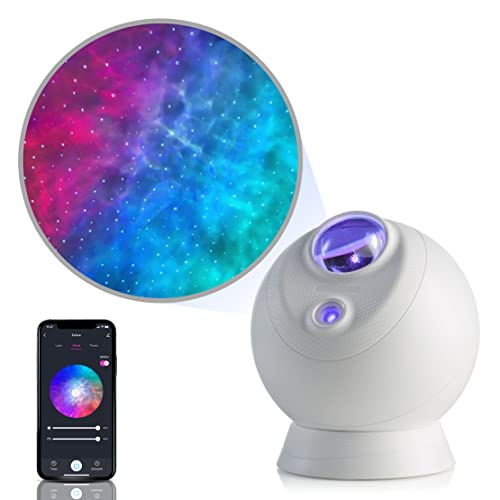
The Sky Lite Evolve is the animated option: it combines an LED nebula cloud with laser-generated stars, so the ceiling gets both a slow wash of color and a field of sharp points. This listing is the blue stars variant, and the projector is controlled over WiFi through the BlissLights app, which handles brightness, effects and rotation without pointing a remote at the unit. BlissLights is a specialist brand in this category rather than a general electronics label, and the Evolve is its current-generation design, a step up from the original Sky Lite, which has become hard to find new.
Specs
- Projection type: LED nebula cloud with laser stars
- Star color: Blue (this variant)
- Control: WiFi app control
- Brand: BlissLights
- Model line: Sky Lite Evolve
Best for: Living rooms and bedrooms where you want a moving, colorful sky as a backdrop for relaxing, music or gatherings.
Watch out for: Laser stars plus an animated nebula can feel busy if your only goal is falling asleep; use the app to slow or still the motion, and confirm the star color variant before ordering since the line is sold in more than one color.
2. Orzorz Star Projector, Galaxy Night Light, Home Planetarium Projector
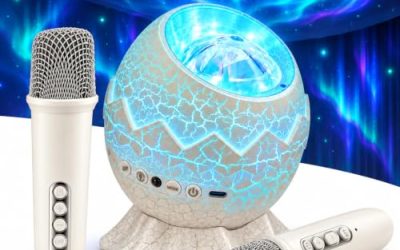
The Orzorz takes the disc route: it projects scenes from interchangeable slide discs, which gives the sky a softer, more photographic character than laser points, closer to looking at the Milky Way than at a light show. The unit is rechargeable, so it is not tied to an outlet and can sit in the middle of a bed or on a low table for centered coverage. Its listing describes it as a home planetarium projector and galaxy night light, and the disc system means your scene library grows by adding discs rather than by changing settings in an app.
Specs
- Projection type: Interchangeable slide disc projection
- Power: Rechargeable
- Product type: Home planetarium projector / galaxy night light
- Brand: Orzorz
Best for: Sleep and quiet rooms where a still, realistic sky is more appealing than animated color effects.
Watch out for: Disc projectors depend on the discs you own, so check which discs are included in the box and what extra discs cost before assuming you have many scenes. Being rechargeable also means remembering to charge it, or the sky goes dark mid-evening.
Which One Fits Your Situation
You want a backdrop for evenings and gatherings
Choose the BlissLights Sky Lite Evolve. The drifting nebula and laser stars are made to be looked at, and app control lets you change the mood from the couch. It fills a living room ceiling with movement and color in a way a still disc image does not try to. The blue star variant pairs well with the deep blue and purple nebula tones the app offers.
You want help winding down at night
Choose the Orzorz disc projector. A still, photographic sky is easier to ignore as you fall asleep than moving laser effects, and the rechargeable body can sit on the bed or floor without a cord crossing the room. Swap discs when a scene gets familiar instead of scrolling settings. If you are sensitive to light motion at night, this is the calmer of the two designs by a wide margin.
Your room is large or has high ceilings
Choose the BlissLights. Laser star points stay distinct as they spread, so the effect survives a big ceiling better than a projected disc image, which fades as it enlarges. You will still want the room properly dark, and placement near the center of the room helps any projector, but the laser design is more forgiving of distance between the unit and the ceiling surface it paints.
You are buying for a child’s bedroom
Choose the Orzorz, and run it on a calm disc scene. A still, photographic sky works as a night light without the stimulation of moving laser effects, and the rechargeable body means no cord trailing from an outlet to the bedside. Set it up once, show your child how the discs swap if they are old enough to handle them carefully, and keep spare discs stored in their sleeves so the scenes stay scratch-free. For a child who is frightened of total darkness, the gentle ceiling glow is often the difference between resisting bedtime and settling into it.
Common Mistakes
- Expecting a planetarium projector to work in a lit room; these are dark-room devices and wash out under normal lighting.
- Confusing star projectors with movie projectors and expecting video input, focus rings or keystone correction.
- Buying a disc projector without checking which discs are included, then finding the scene you wanted is a separate purchase.
- Choosing a rechargeable model for all-night use without checking how you will handle charging between sessions.
- Placing the projector in a corner and expecting even ceiling coverage; centering the unit matters as much as brightness.
Frequently Asked Questions
Are home planetarium projectors accurate to the real night sky?
Most are atmospheric rather than educational. Laser models scatter stars decoratively, and disc models project photographic sky images that look realistic but are not star charts you could navigate by. If your goal is a relaxing sky effect for sleep or ambiance, both types in this guide deliver it. If you want to learn constellations, look for a dedicated educational planetarium with labeled charts, which is a different and usually more expensive product category.
Can a star projector replace a night light for a child’s room?
It can, with caveats. A disc projector on a calm scene works well as a night light because the image is soft and still, and a rechargeable unit avoids cords near the bed. Laser models are brighter and more stimulating, which can work against sleep for younger children. Whichever you choose, use the dimmest comfortable setting, keep the unit out of reach, and never let a child stare into a laser projector lens at close range.
Do I need an app to use a star projector?
No. The disc projector in this guide works without any app at all; you change scenes by swapping physical discs. The BlissLights model uses a WiFi app as its main control, which adds scheduling and effect control but also means setup involves connecting the projector to your home network. If you prefer zero setup and zero accounts, the disc design is simpler. If you like fine-grained control from your phone, the app model gives you more to adjust.
How long do star projectors last?
The light sources in these projectors, LEDs and laser diodes, are rated for many thousands of hours, so the practical limits are usually the moving parts, the battery in rechargeable models, and the discs, which can scratch if handled carelessly. Store discs in their sleeves, avoid leaving a rechargeable unit flat for months at a time, and keep the lens clean with a dry cloth. Treated that way, a home planetarium projector should run for years of nightly use.
More from Amazon
Programs that pair well with the guide above. Offers and eligibility are set by Amazon and may change.
Free shipping on eligible items, Prime Video and more. Eligible new members can start with a free trial.
Start a Prime free trialAd-free music streaming. Eligible new subscribers can start with a free trial.
Try Music Unlimited freeA Prime membership for ages 18-24 with a trial period. Eligibility is set by Amazon.
See Prime for Young AdultsAudiobooks and podcasts to listen to on the go. Eligible new members can start with a free trial.
Try Audible freeAs an Amazon Associate we earn from qualifying purchases.