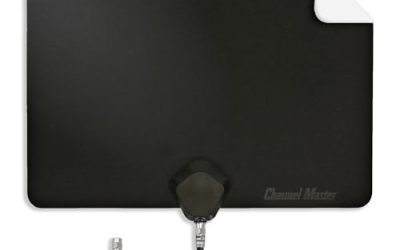
Our Short List of 3
All 5 Picks at a Glance
| Product | Specs | Action |
|---|---|---|
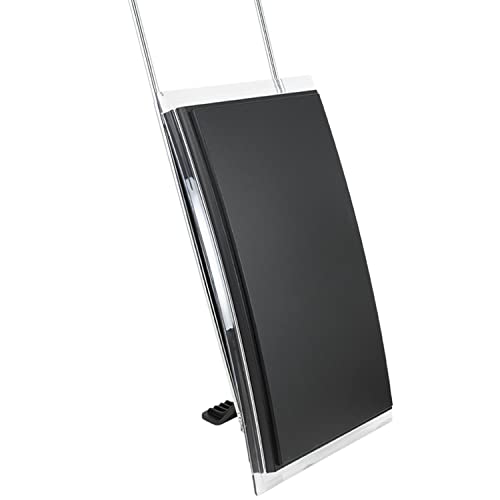 GE Amplified Indoor HD Digital TV Antenna 34134 | Check price on Amazon | |
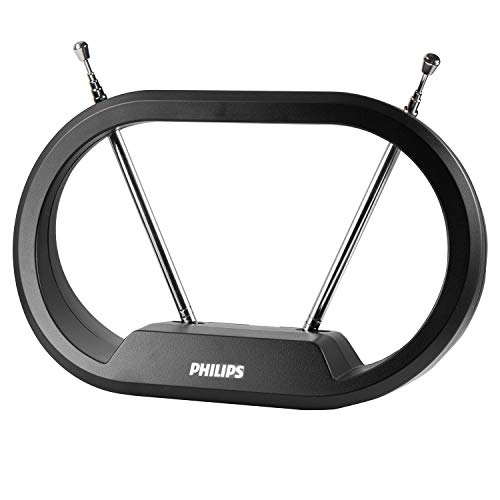 Philips Modern Loop Rabbit Ears Indoor TV Antenna SDV7114A/27 | Check price on Amazon | |
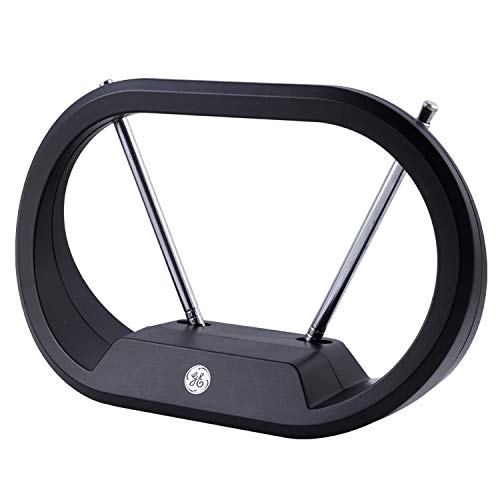 GE Modern Loop Rabbit Ears Indoor TV Antenna 33675 | Check price on Amazon | |
 Philips Rabbit Ears Indoor TV Antenna SDV8201B/27 | Check price on Amazon | |
 GE Traditional Rabbit Ears Indoor TV Antenna 33676 | Check price on Amazon |
Key takeaways
- Compare the best rabbit ear antennas for indoor TV, with extendable VHF dipoles, UHF loops, amplified options and simple tabletop setup tips.
Rabbit ear antennas have survived every wave of TV technology for a simple reason: the design works. Two telescoping metal dipoles handle VHF channels, a loop handles UHF channels, and both elements can be moved by hand until the picture locks in. That adjustability is something a fixed flat panel cannot offer, and it matters most for the low VHF channels that many indoor antennas struggle to hold. For viewers who live reasonably close to their local broadcast towers, a good set of rabbit ears remains one of the simplest ways to watch free over-the-air television.
This guide covers five rabbit-ear style indoor antennas only: classic tabletop models with extendable dipoles and a UHF loop, plus one amplified model for homes farther from the towers. Every model connects with a standard coaxial cable and needs no mounting, drilling, or subscription. The differences come down to stated range, cable length, amplification, and details such as a weighted base.
As an Amazon Associate, we earn from qualifying purchases.
How to Choose
Start With Distance and VHF Needs
Range figures on indoor antennas describe a best-case line of sight between the home and the broadcast towers, not a guarantee for every address. Four of the antennas in this guide carry a stated range of 30 miles, and the amplified GE model carries a stated range of 50 miles. Those numbers assume a reasonably clear signal path. Hills, metal siding, brick walls, and neighboring buildings all shorten the useful distance.
The reason to choose rabbit ears in the first place is usually VHF. Broadcast channels 2 through 13 sit in the VHF band, and longer wavelengths need longer receiving elements. Telescoping dipoles can be extended, shortened, spread apart, or angled, which gives the viewer a physical way to tune for a specific channel. Flat antennas have a fixed element that cannot change length, so for a low VHF station, adjustable dipoles are often the practical answer.
Dipoles for VHF, Loop for UHF
A classic rabbit-ear antenna is really two antennas in one housing. The two extendable rods form a dipole for VHF reception, and the circular or oval loop in the center handles UHF channels 14 and above. When a channel will not come in, the fix is usually mechanical: extend or shorten the rods for VHF stations, rotate or tilt the loop for UHF stations, and then run a fresh channel scan. Moving the whole antenna toward a window or a higher shelf can matter even more.
Passive or Amplified
Passive rabbit ears, which make up most of this guide, need no power at all. They suit homes close to the towers, where the signal is already strong and an amplifier would add nothing useful. Amplified models add a powered booster between the antenna and the TV. Amplification can help at longer distances, but it can also overload a tuner when the signal is already strong. The amplified GE model below includes a filter for cellular interference, a common modern problem.
Cable Length and Placement
The included coaxial cable decides where the antenna can sit. Models in this guide include cables from 4 feet to 6 feet long. A short cable means the antenna lives on the TV stand. A longer cable allows placement on a shelf or closer to a window, which often improves reception more than any other single change.
Base, Build, and Warranty
Most of these antennas are light tabletop units, so a weighted base with rubber feet is worth noting: it keeps the antenna upright when the dipoles are spread wide and protects the furniture underneath. All five models carry limited lifetime warranty coverage as listed. There are no batteries to replace, no apps to install, and no firmware to update.
GE Amplified Indoor HD Digital TV Antenna 34134
The GE 34134 is the amplified option in this guide, built for viewers who are farther from the towers or whose signal passes through more walls. It keeps the extendable rabbit ear dipoles that define this category and adds an integrated amplifier with PureAmp Technology plus a built-in filter for 4G and 5G LTE interference. The manufacturer states a working range of up to 50 miles from the broadcast source, the longest figure in this guide, and the listing describes support for 4K Ultra HD broadcasts as television standards evolve alongside current 1080p HD reception.
The included stand can position the antenna vertically or horizontally. The listing title notes a 6-foot coaxial cable and an AC adapter for the amplifier, so this model needs a nearby power outlet. At 1 pound it is larger than the passive models, but it is the one to choose when distance, not simplicity, is the main problem.
This antenna suits viewers near the edge of indoor reception range, roughly in the band where passive rabbit ears find some channels but lose others. It also suits homes where cellular interference is a known issue, thanks to the built-in LTE filter. Viewers who live very close to their towers, or who have no spare outlet near the TV, will usually be better served by one of the passive models below.
Philips Modern Loop Rabbit Ears Indoor TV Antenna SDV7114A/27
The Philips SDV7114A/27 pairs 15-inch extendable dipoles with a contemporary loop design in a compact black tabletop housing. The manufacturer states a range of up to 30 miles from the broadcast source, with reception for both VHF and UHF channels and support for 1080p HD broadcasts and 4K Ultra HD readiness. The adjustable chrome dipoles are the main tuning tool: length and angle change how the antenna responds to VHF stations, while the loop handles the UHF band.
Setup is simple. The antenna sits on a TV stand or shelf, connects with the included 4-foot coaxial cable, and then the viewer adjusts the dipoles and runs a channel scan. The listing also positions it as a backup for cable or satellite households, since a tabletop antenna can restore local broadcasts when that service is interrupted by weather. At about 209 grams, it is light enough to move between rooms.
This model suits viewers within roughly 30 miles of their towers who want a modern-looking loop design rather than the traditional circular loop, and who plan to keep the antenna close to the TV where a 4-foot cable is enough. It is a sensible pick for apartments and smaller rooms where the TV stand is already the best signal spot in the room.
GE Modern Loop Rabbit Ears Indoor TV Antenna 33675
The GE 33675 is the GE counterpart in the modern loop style: 15-inch extendable dipoles, a contemporary loop for UHF, and a stated range of up to 30 miles. The listing describes reception in full 1080p HD with 4K Ultra HD readiness, compatibility with all major TV brands, and a weighted base with rubber feet for stable tabletop placement. That base detail matters in daily use, because a light antenna with fully spread dipoles can tip or slide on a smooth TV stand.
Like the Philips modern loop model, this is a passive design with no power requirement. The GE model is slightly taller in its listed dimensions and a little lighter than the Philips version, and it carries a limited lifetime warranty. For many buyers the choice between these two will come down to brand preference and which housing fits better beside the TV.
This antenna suits viewers close to mid-range from their towers who want the modern loop look with a steadier base, and households that prefer the GE name in this category. It fits the same situations as the Philips modern loop model: a TV stand placement, a short cable run, and local channels that include VHF stations a flat antenna may not hold reliably.
Philips Rabbit Ears Indoor TV Antenna SDV8201B/27
The Philips SDV8201B/27 is the traditional version of the Philips rabbit-ear design: adjustable dipoles for VHF and a circular loop for UHF, in a black tabletop housing with a weighted base and rubber feet. Mirror listings for this model state a maximum range of 30 miles, support for uncompressed 1080p signals with 4K readiness, and compatibility with all brands of HDTVs. The manufacturer description emphasizes superior reception for both VHF and UHF signals, which is exactly the combination the classic dipole-and-loop layout is built to provide.
The practical advantage over the modern loop Philips model is the cable: this version includes a 5-foot coaxial cable instead of 4 feet. That extra length can be the difference between sitting on the TV stand and reaching a nearby shelf or window-adjacent spot, and placement often decides reception quality more than small specification differences do. At 200 grams, it remains easy to reposition while tuning.
This model suits viewers who like the classic circular loop style and want a little more placement freedom than a 4-foot cable allows. It is a good fit for a bedroom, kitchen, or spare-room TV within range of the towers, and for anyone reviving an older set that needs both VHF dipoles and a UHF loop in one simple unit.
GE Traditional Rabbit Ears Indoor TV Antenna 33676
The GE 33676 is the most traditional antenna in this guide, and deliberately so. It combines 15-inch extendable dipoles with a circular loop in a compact black housing, with a passive design that needs no power and no amplifier settings to manage. The listing describes enhanced high-definition reception with optimized free digital channels in full 1080p HD, compatibility with all television brands, and backing by a limited lifetime warranty. The special features listed for this model include its dipole design and low profile form.
Because there is nothing to configure beyond position, this antenna rewards the classic tuning routine: spread the dipoles for VHF, adjust the loop for UHF, point it toward the towers where possible, and rescan after meaningful moves. The manufacturer notes that range depends on a line of sight path, and that hilly terrain, obstructions, and metal construction materials can limit results. At 8.6 ounces it is light and easy to store, which also makes it a practical emergency backup for outages.
This antenna suits viewers close to their broadcast towers who want the simplest possible rabbit-ear setup with a long-established model design. It also suits anyone who wants an inexpensive-feeling, no-power backup for a second TV or for weather outages, and viewers whose local lineup leans on VHF channels that benefit from fully adjustable dipoles.
FAQ
Do rabbit ear antennas still work with modern TVs?
Yes. Current TVs with a built-in digital tuner and a coaxial input can use a rabbit-ear antenna directly: connect the cable, select the antenna input, and run a channel scan. The antennas in this guide are listed as compatible with all major TV brands and support 1080p HD, with 4K readiness for evolving standards. A very old analog TV would need a converter box, but a modern TV needs nothing extra for a passive model.
Why do rabbit ears receive VHF channels better than flat antennas?
VHF channels use longer wavelengths, which are received best by longer elements. Telescoping dipoles can be extended and angled to suit a particular VHF station, while a flat antenna has a fixed element that cannot change length or shape. That is why a home that loses channels 2 through 13 on a flat panel often recovers them with adjustable rabbit ears.
How far can a rabbit ear antenna reach?
The passive models in this guide carry a stated range of 30 miles, and the amplified GE model states up to 50 miles. Those figures assume a clear line of sight to the broadcast towers. Walls, hills, trees, and metal building materials reduce the real distance, sometimes by a large amount. Viewers well beyond the stated range, or in a valley or a metal-sided building, should expect an indoor antenna of any style to struggle and may need a different installation approach.
Should a rabbit ear antenna be amplified?
Only when the signal is weak to begin with. Amplification helps at longer distances or where the signal passes through several walls, and the amplified model in this guide adds a filter for cellular interference. Close to the towers, an amplifier can overload the tuner and make reception worse rather than better. The practical order is to try a passive antenna first when the towers are nearby, and choose the amplified model when distance or building construction is the known problem.
Final Verdict
Rabbit ears remain the right tool when VHF channels matter, because no fixed flat element can match dipoles that extend, spread, and angle by hand. For most homes within about 30 miles of the towers, any of the four passive models here will do the job: the two modern loop designs suit TV stand placement with short cables, the traditional Philips adds a 5-foot cable and a classic circular loop, and the traditional GE offers the simplest design in the group. For homes farther out or fighting interference, the amplified GE 34134 is the clear step up, with a stated 50-mile range, PureAmp amplification, and a built-in LTE filter. Choose by distance first, cable length second, and style last.
Product and ASIN Reference
| Product | ASIN |
|---|---|
| GE Amplified Indoor HD Digital TV Antenna 34134 | B01HSSB2WG |
| Philips Modern Loop Rabbit Ears Indoor TV Antenna SDV7114A/27 | B07D4YW5HR |
| GE Modern Loop Rabbit Ears Indoor TV Antenna 33675 | B01L2WKTAU |
| Philips Rabbit Ears Indoor TV Antenna SDV8201B/27 | B07BLNWZHS |
| GE Traditional Rabbit Ears Indoor TV Antenna 33676 | B000EIMKYC |
More from Amazon
Programs that pair well with the guide above. Offers and eligibility are set by Amazon and may change.
Free shipping on eligible items, Prime Video and more. Eligible new members can start with a free trial.
Start a Prime free trialAd-free music streaming. Eligible new subscribers can start with a free trial.
Try Music Unlimited freeA Prime membership for ages 18-24 with a trial period. Eligibility is set by Amazon.
See Prime for Young AdultsAudiobooks and podcasts to listen to on the go. Eligible new members can start with a free trial.
Try Audible freeAs an Amazon Associate we earn from qualifying purchases.