Our Short List of 3


All 5 Picks at a Glance
| Product | Specs | Action |
|---|---|---|
| 1. Antennas Direct ClearStream 2V — Best Overall for Most Basements | Check price on Amazon | |
| 2. Televes DAT BOSS Mix LR 148383 — Best for Weak and Distant Signals | Check price on Amazon | |
 3. Winegard HD7694P — Best Classic Attic Yagi | Check price on Amazon | |
 4. Antop AT-800SBS — Best Amplified Panel | Check price on Amazon | |
 5. Antennas Direct ClearStream 1MAX — Best Compact Attic Fallback | Check price on Amazon |
Key takeaways
- Find the best tv antennas for basements with outdoor and attic-capable picks, amplifier tips, and long coax runs that bring free local channels below grade.
As an Amazon Associate I earn from qualifying purchases.
The Short Answer
A basement is the hardest room in a house for over-the-air television. The television sits below grade, surrounded by concrete foundation walls and earth, often with small windows or none at all. A flat indoor antenna stuck to a basement wall is fighting physics, and in most homes it loses. The working answer for the best tv antennas for basements is to put the antenna where the signal actually is: outside on a mast, on a roof or eave mount, or in the attic, and then run a long RG6 coax cable down to the basement television.
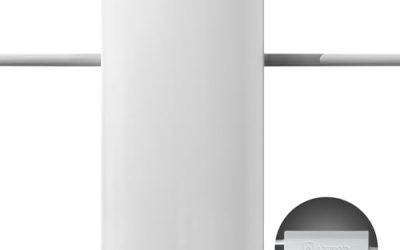
That single change in placement matters more than any single antenna model. An attic or outdoor antenna sits above the concrete and earth that block basement signals, and it can be aimed at the broadcast towers instead of at a foundation wall. If you want one name first, start with the Antennas Direct ClearStream 2V: dual-loop UHF elements, dedicated high-VHF elements, a reflector, and a 60-plus-mile range on a 20-inch mast that works in an attic or outdoors. For the weakest signals, the Televes DAT BOSS Mix LR adds a built-in amplifier with automatic gain control.
Our Top Picks
- Best overall for most basements: Antennas Direct ClearStream 2V — dual-loop UHF plus high-VHF elements, reflector, 60-plus-mile range, attic or outdoor mounting.
- Best for weak and distant signals: Televes DAT BOSS Mix LR 148383 — full-band low-VHF, high-VHF, and UHF coverage with a built-in amplifier and automatic gain control.
- Best classic attic Yagi: Winegard HD7694P — 45-mile long-range antenna with 28 active elements, built for outdoor or attic mounting.
- Best amplified panel: Antop AT-800SBS — amplified panel antenna with a Smart Boost amplifier and LTE filter, built for indoor or outdoor use.
- Best compact attic fallback: Antennas Direct ClearStream 1MAX — a light single-loop antenna with a 40-plus-mile range for smaller attics and shorter tower distances.
Quick Comparison
| Antenna | Range | Bands | Amplifier | Mounting | Weight |
|---|---|---|---|---|---|
| Antennas Direct ClearStream 2V | 60-plus miles | UHF, high-VHF | Not included | Attic, outdoor, mast | Confirm on the listing |
| Televes DAT BOSS Mix LR 148383 | Up to 100 miles | Low-VHF, high-VHF, UHF | Built-in, automatic gain control | Outdoor mast | About 12 pounds |
| Winegard HD7694P | 45 miles | High-VHF, UHF | Not included | Attic, outdoor, mast | 6.7 pounds |
| Antop AT-800SBS | Up to 85 miles | FM, low-VHF, high-VHF, UHF | Built-in Smart Boost | Indoor, outdoor | 8.23 pounds |
| Antennas Direct ClearStream 1MAX | 40-plus miles | UHF, high-VHF | Not included | Attic, outdoor, mast | 1.2 pounds |
How to Choose
Start with placement, not the antenna
Before comparing models, decide where the antenna will live. A basement television needs a signal path that does not pass through foundation walls and soil. In practice that means three options, in order of how well they usually work: an outdoor mast or roof mount, an attic mount, or a high window on the ground floor above the basement with a coax run downstairs. An outdoor mount is the strongest choice because it clears the roofline. An attic mount is the most common compromise: it is protected from weather, it is easier to reach, and it still sits above the basement walls. A basement window placement is the weakest option and should be treated as a test, not a plan.
Check tower direction and distance first
Use a broadcast tower map for your address before buying. Note how far the towers are and whether they sit in one direction or spread across the compass. A directional antenna such as a Yagi or a reflector-backed loop pulls harder in one direction and rejects signals from behind, which helps when all of your towers sit in the same arc. A multi-directional antenna tolerates a wider spread of towers at a small cost in peak gain. The ClearStream 2V and 1MAX are multi-directional, the Winegard HD7694P is a directional Yagi, and the Televes DAT BOSS Mix LR is a high-gain directional antenna. Match the pattern to your towers.
VHF matters more than most buyers expect
Many network affiliates still broadcast on high-VHF channels 7 through 13, and a few broadcast on low-VHF channels 2 through 6. An antenna that only covers UHF will miss those stations entirely. Every pick in this guide covers high-VHF and UHF. The Televes DAT BOSS Mix LR and the Antop AT-800SBS also cover low-VHF, which is worth having if your tower map shows a low-VHF station in your area.
Amplifiers help long runs, and they can also hurt
A basement installation usually means a long coax run from the attic or roof down to the television, and every foot of cable loses a little signal. An amplifier placed near the antenna, before the long run, compensates for that loss. That is why the Televes and the Antop picks include built-in amplification. But an amplifier also amplifies noise, and in a strong-signal area it can overload a tuner and make reception worse. If your towers are close, an unamplified antenna such as the ClearStream 2V or the Winegard HD7694P is often the cleaner choice, and a separate preamplifier can be added later if the long run proves too much. Put the amplifier at the antenna end of the cable, not at the television end.
Plan the coax run and the mount
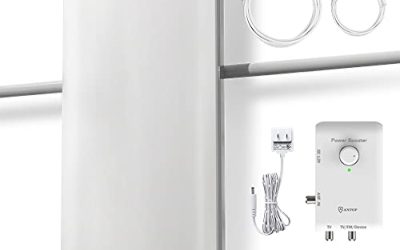
Measure the cable path before you buy: from the antenna location, through the attic or along the outside wall, down to the basement television. Use RG6 coax, keep the run as short and as straight as practical, and avoid sharp bends and cheap splitters. If the antenna will feed more than one television, plan for a distribution amplifier or a quality splitter where the cable enters the house, and confirm on the listing whether the antenna includes a cable. The ClearStream 2V does not include coax, so budget for a separate RG6 run of the right length if you choose it. The Antop AT-800SBS, by contrast, includes a 40-foot coax cable plus two 5-foot cables.
The Picks in Detail
1. Antennas Direct ClearStream 2V — Best Overall for Most Basements
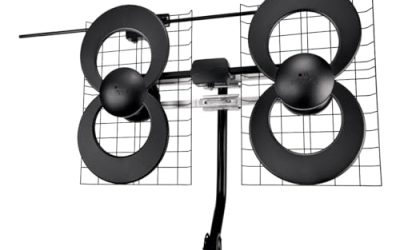
The ClearStream 2V is the pick that fits the basement problem most directly. It is an indoor, attic, and outdoor antenna with two patented UHF loops, dedicated high-VHF elements, and a reflector that focuses forward gain and rejects interference from behind. Its stated range is 60-plus miles, and it supports 4K and 8K UHD and NEXTGEN TV, also known as ATSC 3.0. A 20-inch mast with a pivoting base is included, with mounting hardware and an adjustable clamp, so it can be fixed to a vertical attic truss or a horizontal surface.
Pros:
– Dual-loop UHF plus dedicated high-VHF elements cover the bands most local stations use
– Reflector adds forward gain and rejects rear interference that causes pixelation
– Included 20-inch mast with pivoting base mounts in attics or outdoors
– ATSC 3.0 ready for next-generation broadcasts
– Lifetime manufacturer antenna warranty
Cons:
– No built-in amplifier, so very weak-signal homes may need a separate preamplifier
– Coax cable is not included
– Single high-VHF dipole can be the limiting factor on some VHF channels
View the Antennas Direct ClearStream 2V on Amazon
2. Televes DAT BOSS Mix LR 148383 — Best for Weak and Distant Signals
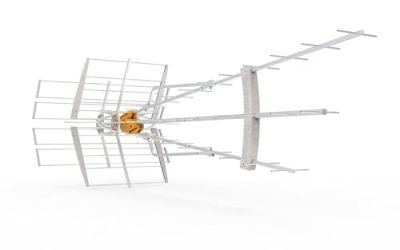
The Televes DAT BOSS Mix LR is the heavy lifter in this guide. It is a full-band antenna covering low-VHF, high-VHF, and UHF, with a stated range of up to 100 miles, a triple-boom layout with multiple directors and reflectors, and a built-in TForce amplifier with automatic gain control that adjusts itself in real time. It also includes integrated LTE, 4G, 5G, and FM filtering to keep out-of-band noise out of the tuner, and it is compatible with ATSC 3.0 broadcasts. The package includes a UL-listed 12V dual-output power inserter and mast clamps; confirm on the listing whether a wrench and weather boot are included.
Pros:
– Full-band coverage including low-VHF, which most antennas in this guide do not have
– Built-in amplifier with automatic gain control adapts to signal conditions
– LTE, 4G, 5G, and FM filtering reduces out-of-band interference
– Up to 100-mile stated range for fringe and rural homes
– Power inserter and mast clamps included
Cons:
– Large and heavy at about 12 pounds, needs a solid mast mount
– Directional design must be aimed carefully at the towers
– Built-in amplification needs mains power at the inserter
View the Televes DAT BOSS Mix LR 148383 on Amazon
3. Winegard HD7694P — Best Classic Attic Yagi
The Winegard HD7694P is a long-range outdoor and attic antenna with a 45-mile stated range, built around 28 active elements: 17 UHF elements and 11 VHF elements on a 65-inch boom. It receives high-VHF and UHF signals, supports 4K Ultra-HD and ATSC 3.0 broadcasts, and includes hardware for mounting to a mast, with a 75-ohm coax connection. Winegard has made antennas since 1954, and the HD7694P carries a 1-year limited warranty.
Pros:
– 28 active elements give strong directional gain without an amplifier
– High-VHF and UHF coverage for the bands most stations use
– Outdoor or attic mounting with mast hardware included
– ATSC 3.0 ready
– No amplifier to overload in strong-signal areas
Cons:
– Large size with a 65-inch boom needs a roomy attic
– Directional design must be aimed at the towers
– No built-in amplifier for very long coax runs
View the Winegard HD7694P on Amazon
4. Antop AT-800SBS — Best Amplified Panel
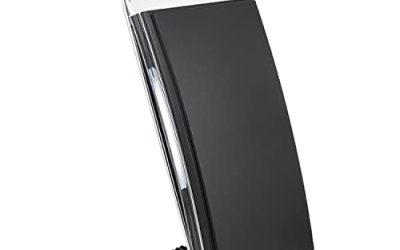
The Antop AT-800SBS is an amplified HDTV and FM panel antenna built for indoor or outdoor use. It covers FM, low-VHF, high-VHF, and UHF, and it includes a Smart Boost amplifier with a 4G LTE filter, and Antop lists a range of up to 85 miles. The panel measures about 10.24 by 4.72 by 23.46 inches and weighs 8.23 pounds, and the box includes a 40-foot coax cable plus two 5-foot cables. Antop describes the AT-800SBS as a multi-directional amplified panel.
Pros:
– Built-in Smart Boost amplifier helps long coax runs to a basement television
– Full-band coverage including low-VHF and FM
– 4G LTE filter reduces cell-signal interference
– Panel form fits attic walls and short masts where a Yagi will not
– Indoor and outdoor use in one model
Cons:
– Heavier than it looks at 8.23 pounds, needs a solid mount
– Range figures vary across listings (80 vs 85 miles), so confirm on the listing
– Amplification can overload a tuner in strong-signal areas
View the Antop AT-800SBS on Amazon
5. Antennas Direct ClearStream 1MAX — Best Compact Attic Fallback
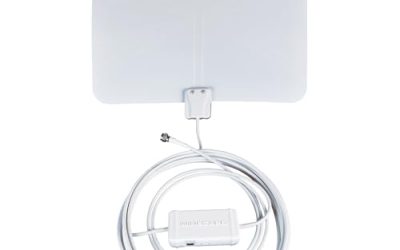
The ClearStream 1MAX is the compact fallback in this guide, and it is the only model shared with the indoor antenna roundup on this site, used here in a different role: an attic or outdoor antenna for a basement television, not a living-room flat panel. It uses a single patented loop to receive signals 40-plus miles from broadcast towers, with multi-directional UHF and high-VHF elements tuned for North American frequencies. Its peak gain is 6.8 dBi on UHF and 2.1 dBi on high-VHF, with a 60-degree horizontal reception pattern. It measures about 10.1 inches high by 31.3 inches wide by 4 inches deep, weighs 1.2 pounds, and includes a 20-inch mast, all-weather mounting hardware, and an adjustable mast clamp. It supports 4K and 8K UHD and NEXTGEN TV, and it carries a lifetime manufacturer antenna warranty.
Pros:
– Very light at 1.2 pounds, fits small attics and single-truss mounts
– 40-plus-mile range with multi-directional UHF and high-VHF elements
– Included 20-inch mast and all-weather mounting hardware
– ATSC 3.0 ready
– Lifetime manufacturer antenna warranty
Cons:
– Less gain than the dual-loop 2V, so fringe reception is weaker
– No built-in amplifier for long coax runs
– Coax cable is not included with some variants, so confirm on the listing
View the Antennas Direct ClearStream 1MAX on Amazon
Who Should Choose What
- Most basement setups: Choose the ClearStream 2V for the best balance of range, VHF coverage, and attic fit.
- Distant or weak signals: Choose the Televes DAT BOSS Mix LR for full-band coverage and built-in amplification.
- Towers in one direction, roomy attic: Choose the Winegard HD7694P for directional Yagi gain.
- Attic wall mount with amplification built in: Choose the Antop AT-800SBS for its panel form and Smart Boost amplifier.
- Small attic, towers within 40 miles: Choose the ClearStream 1MAX, the lightest pick here.
Common Mistakes
- Mounting the antenna in the basement. A basement wall is the worst place in the house for an antenna. Concrete, earth, and metal ductwork block the signal before it reaches the elements. Move the antenna to the attic or outdoors first, then judge the model.
- Buying an indoor flat antenna for a below-grade room. Flat indoor antennas are built for a window in a living space with a clear view toward the towers. A basement rarely has that, and the flat panel cannot make up for the missing signal path.
- Adding amplification before trying the antenna without it. An amplifier helps a long coax run, but it also amplifies noise and can overload a tuner when towers are close. Test the antenna unamplified first if the model allows it, then add gain only if channels are missing or breaking up.
- Using the wrong coax or a long chain of splitters. Thin or damaged coax and a stack of splitters lose signal on the way downstairs. Use RG6 coax, keep the run direct, and put any splitter or distribution amplifier where the cable enters the house, not at the television end.
- Forgetting low-VHF stations. If your tower map shows a station on channels 2 through 6, a UHF-only or high-VHF-only antenna will miss it. The Televes DAT BOSS Mix LR and the Antop AT-800SBS cover low-VHF.
FAQ
Can I just put an indoor antenna in my basement?
You can try, but it rarely works well. A basement sits below grade behind concrete and earth, and an indoor antenna in that room has no clear path to the towers. An attic or outdoor antenna with a coax run down to the basement television is the reliable answer in most homes. Test an indoor antenna only if your towers are close and your basement has a large window facing them.
Is an attic antenna good enough for a basement television?
In many homes, yes. An attic antenna sits above the foundation walls and the soil that block basement signals, and it is protected from weather. It loses some signal to roofing material, especially metal roofing, but it usually outperforms any basement placement by a wide margin. If the attic does not work, the next step is an outdoor mast or roof mount.
Do I need an amplified antenna for a basement?
It depends on the coax run and the tower distance. A long run from the attic or roof down to a basement television loses signal, and an amplifier near the antenna compensates for that loss. The Televes DAT BOSS Mix LR and the Antop AT-800SBS include amplification. If your towers are close, an unamplified antenna such as the ClearStream 2V or the Winegard HD7694P may work better, with a separate preamplifier added only if needed.
How long can the coax cable be?
There is no single limit, because it depends on signal strength, cable quality, and whether an amplifier is in the line. Use RG6 coax, keep the run as short and direct as practical, and put any amplifier at the antenna end. If the run is very long or feeds several televisions, a distribution amplifier at the entry point is usually the right addition.
What if my towers are in different directions?
Choose a multi-directional antenna such as the ClearStream 2V or 1MAX, which tolerates a wider spread of towers, or consider a rotator for a directional antenna. A single fixed Yagi aimed between two distant tower clusters will usually serve neither well.
Conclusion
The best tv antennas for basements are not basement antennas at all. They are attic-capable and outdoor antennas mounted where the signal is, with a coax run down to the television below. Start with the Antennas Direct ClearStream 2V for most homes, move to the Televes DAT BOSS Mix LR when the signals are weak or distant, and pick the Winegard HD7694P when your towers sit in one direction and your attic has room for a Yagi. The Antop AT-800SBS adds built-in amplification in a panel form, and the ClearStream 1MAX covers small attics and shorter tower distances. Whichever model you choose, mount it high, aim it at the towers, use RG6 coax, and run a fresh channel scan.
More from Amazon
Programs that pair well with the guide above. Offers and eligibility are set by Amazon and may change.
Free shipping on eligible items, Prime Video and more. Eligible new members can start with a free trial.
Start a Prime free trialAd-free music streaming. Eligible new subscribers can start with a free trial.
Try Music Unlimited freeA Prime membership for ages 18-24 with a trial period. Eligibility is set by Amazon.
See Prime for Young AdultsAudiobooks and podcasts to listen to on the go. Eligible new members can start with a free trial.
Try Audible freeAs an Amazon Associate we earn from qualifying purchases.