Key takeaways
- Type: Two-piece seam roller set
- Main wheel: 40mm silicone seam roller
- Detail wheel: 6mm brass detail penny roller
- Membrane compatibility: PVC, TPO, EPDM, and general single ply welding
- Handle: Metal shaft with grip handle on each tool
- Format: Separate rollers, so each can be used independently
- Brand: QWORK
- Price tier: Premium
The Best Seam Rollers for Single Ply Roofing: A Complete Buyer’s Guide
The best seam roller for single ply roofing is the QWORK 2 Pcs 40mm Silicone Seam Roller with 6mm Brass Detail Penny Roller, because the 40mm silicone wheel presses the full width of most heat-welded lap seams in a single pass while the 6mm brass penny roller lets you chase the tight corners and T-joints where silicone wheels cannot reach. If you only run TPO and PVC and want one tool that does both jobs, that pair covers it. If you are rolling EPDM with contact adhesive and never touch a heat welder, a single-purpose silicone roller such as the KEDILAKE or Huyopu will do the same work for less. And if you are a commercial crew running hundreds of feet of seam a day, the Everhard MR13140 double-end design is the one that survives the abuse. This guide compares width, wheel material, handle reach and pressure control across twelve currently listed rollers so you can match the tool to the membrane you actually install.
Top 3 Picks
Best overall: The QWORK 2 Pcs 40mm Silicone Seam Roller with 6mm Brass Detail Penny Roller is the pick for the widest range of installers because it pairs a 40mm silicone wheel for broad lap seams with a 6mm brass penny roller for edges, corners, pipe boots and T-joints. Two tools means you stop swapping and stop improvising with a screwdriver handle on detail work.
Best budget: The Huyopu 40mm Silicone Seam Roller with 6mm Brass Detail Penny Roller delivers the same 2-in-1 layout as the QWORK pair at the lowest price tier in this roundup. It suits the homeowner doing a single small flat roof, a shed, or a garage who does not need a tool that survives years of commercial use.
Best premium: The Everhard Double End Seam Roller MR13140 combines a silicone roller and a brass detail roller on a single steel shaft with a swivel-free fixed handle. It is the choice for full-time roofing contractors who want one tool in the pouch and no chance of dropping half of a two-piece kit off a roof edge.
Quick Comparison
| Product | Best For | Key Specs | Price Tier |
|---|---|---|---|
| QWORK 2 Pcs 40mm Silicone + 6mm Brass Detail Penny Roller | Overall best for TPO/PVC welders who also do detail work | 40mm silicone wheel, 6mm brass penny roller, two-piece set, metal handle | Premium |
| Everhard Double End Seam Roller MR13140 | Full-time crews wanting one tool for everything | Double-end, silicone one side, brass detail other side, single shaft | Premium |
| KEDILAKE Seam Roller for PVC/TPO/EPDM | Cross-material use and woodworking or flooring crossover | Single silicone roller, general-purpose handle, PVC/TPO/EPDM rated | Mid-range |
| QWORK 40mm Silicone + 6mm Brass Detail Penny Roller (single set) | Budget-conscious pros who want a spare detail roller | 40mm silicone wheel, 6mm brass penny roller, smoothing seam tool | Mid-range |
| CraftyDream 2 Pcs Seam Roller with Tester Probe and Dual Roller | Weld verification in the same kit | Two rollers plus tester probe, dual roller design, PVC/TPO rated | Premium |
| Kooingtech Brass Seam Roller 6mm Detail Penny | Detail work and tight radius seams only | 6mm brass penny roller, solid brass wheel, narrow profile | Budget |
| KOBSAINF 40mm Silicone + 6mm Brass Detail Roller | One-pass lap seams plus corners | 40mm silicone wheel, 6mm brass roller, roofing-focused set | Mid-range |
| QWORK Seam Roller Kit with 40mm Silicone, Detail Penny Roller & Seam Tester | Complete start-to-finish weld workflow | 40mm silicone, detail penny roller, seam tester, kit format | Mid-range |
| Huyopu 40mm Silicone + 6mm Brass Detail Penny Roller | Budget DIY flat roof projects | 40mm silicone wheel, 6mm brass roller, 2-in-1 welding tool | Budget |
| SUGOOE Double-Headed Seam Roller | Wide silicone coverage plus narrow brass detail | 1.57 inch (40mm) silicone roller, 1.18 inch (30mm) brass wheel, high temperature waterproof | Budget |
| QWORK Silicone Seam Roller 40mm High Temperature Resistant | Single-purpose silicone rolling for hot-air welds | 40mm silicone wheel, high temperature resistant, hand pressure roller | Budget |
| Zimpty ZY890 Double-End Seam Roller and Tester Combo | Pros who want a tester integrated into the tool | Silicone + brass detail penny roller, integrated seam tester probe | Premium |
How We Chose
Every roller in this roundup is judged on four measurable variables: wheel width, wheel material, handle reach and pressure behaviour. Width matters because a heat-welded lap seam on a 1.5mm or 2mm single ply membrane typically needs a roller at least as wide as the weld zone; a 40mm wheel covers the standard lap in one or two passes, while a 6mm wheel is a detail tool, not a production tool. Material matters because silicone releases cleanly from hot TPO and PVC without smearing or sticking, while brass is chosen for the small penny rollers because it holds a crisp edge and transmits pressure through a narrow contact patch without deforming. Handle reach and shape determine whether you can roll a seam on a knee-wall cap or a parapet without overreaching and losing control. Pressure behaviour, which is really about wheel diameter and shaft stiffness, decides whether you can apply consistent hand force without the wheel digging in and thinning the membrane.
Beyond spec sheets, we weighted category fit and upgrade path. A homeowner welding a shed roof and a commercial installer working 10,000 square feet a week have different needs, and the picks reflect that: budget tiers for one-off jobs, mid-range for part-time installers, premium for full-time crews. We also favoured kits that combine a silicone roller with a brass detail penny roller, because detail work is where most seam failures originate and where a single 40mm tool is genuinely inadequate. No product here is claimed to have been tested by us; the criteria are drawn from published product specifications and established practice in single ply membrane installation. Where an exact figure is not stated by the manufacturer, we describe the tool by its spec class rather than inventing a number.
How to Choose
Choosing a seam roller for single ply roofing comes down to four decisions in order: what membrane you are welding, how wide your laps are, how much detail work the job contains, and how often you will use the tool. Work through them in that sequence and the shortlist collapses fast.
Step 1: Match the wheel material to the membrane
Silicone is the default for heat-welded TPO and PVC. It is chosen because it tolerates the surface temperature of a freshly welded seam, releases without sticking to the plasticised membrane, and does not leave marks on light-coloured TPO. Most silicone rollers in this category are marketed as high temperature resistant, which is the property that matters when you are rolling a seam seconds after the hot-air welder passes over it. If you roll a hot TPO seam with a rubber or plastic wheel, you risk the wheel softening, picking up membrane material, or leaving a rough surface impression that becomes a future leak path.
Brass is the default for detail work, and it is not a substitute for silicone on the main seam. Brass penny rollers of around 6mm are used on corners, T-joints, pipe boots, inside and outside corners of parapets, and the termination points where the main lap meets a wall flashing. Brass holds its shape under hand pressure, does not deform against a hard substrate, and can be pushed into a tight radius where a 40mm silicone wheel physically cannot fit. The classic failure mode is an installer using a 40mm roller everywhere and missing the last 10mm of a corner; that gap is where water finds its way under the membrane.
Some rollers combine both materials on a single tool, either as a double-ended design or a dual-roller head. The advantage is nothing gets left in the truck. The disadvantage is that you cannot replace the silicone wheel independently of the brass one, so when the silicone wears you replace the whole tool.
Step 2: Size the wheel to your lap width
Forty millimetres is the most common silicone roller width in this category, and it is not accidental. A standard heat-welded lap on 1.5mm to 2mm single ply membrane is typically 40mm to 80mm wide after the weld is completed. A 40mm roller lets you press the weld zone in one pass along a straight run, or two overlapping passes on a wider lap. A narrower roller, say 20mm, forces you into three or four passes and increases the chance of inconsistent pressure, which is exactly what causes cold welds and poor seam strength.
On the detail side, 6mm is the standard brass penny roller diameter, and it exists because that is roughly the smallest radius you can roll into a corner without the wheel binding. Some tools use a larger brass wheel, commonly around 30mm (about 1.18 inch). A 30mm brass wheel is a compromise: it covers more ground on medium-detail work but will not fit into genuinely tight corners the way a 6mm penny roller will. If a listing offers a 1.57 inch silicone wheel paired with a 1.18 inch brass wheel, treat it as a general-purpose pair rather than a true detail kit, and expect to still want a 6mm penny roller for corners.
There is a practical coverage calculation worth doing before you buy. If your roof has 3,000 linear feet of seam and you roll with a 40mm wheel at an average walking pace of about 3 feet per second, each pass takes roughly 17 minutes of pure rolling time. Add a 50 percent factor for repositioning, kneeling, and checking, and that seam is about 25 minutes of roller time per pass. A tool that requires three passes instead of one turns that into 75 minutes. Over a season, roller width is a labour-cost decision, not a comfort decision.
| Roller width | Best used for | Typical lap coverage | Passes on a 40–80mm lap |
|---|---|---|---|
| 6mm brass penny | Corners, T-joints, pipe boots, terminations | Detail only | n/a — detail tool |
| 20mm silicone | Narrow laps, repairs, small patches | Up to 20mm per pass | 2–4 |
| 30mm brass or silicone | Medium detail, medium-width laps | Up to 30mm per pass | 2–3 |
| 40mm silicone | Standard straight lap seams | Up to 40mm per pass | 1–2 |
| 50mm+ silicone | Wide laps, high-volume production | Up to 50mm+ per pass | 1 |
Step 3: Think about handle reach and shape
Handle reach is the spec nobody reads and everybody regrets ignoring. A short handle gives you fine control on detail work but forces you to lean over the seam on long runs, which is how installers lose balance on a low-slope roof. A longer handle lets you roll a seam while standing more upright, applying pressure through your shoulder rather than your lower back. For a full day of seam rolling, the difference is significant.
The shape matters too. A straight, fixed handle transmits force in a predictable direction and is the safest choice for detail work where you need precision. A rotating or swivel handle reduces wrist fatigue on long straight runs but can wander on corners. If you do both, a two-tool kit makes more sense than one tool trying to do both jobs badly. Look for a handle with a knurled or textured grip; a smooth metal handle becomes slippery the moment you are wearing gloves in cold weather, and roofing is frequently done in cold weather.
Reach also interacts with the shaft. A double-ended roller with a long shaft lets you apply two-handed pressure on the main seam and one-handed precision on details. That is the primary argument for the Everhard and Zimpty double-end designs, and it is a real advantage on a production crew where every tool transfer costs time.
Step 4: Understand pressure control
Pressure control is the hardest thing to judge from a listing, but it follows from geometry. A smaller-diameter wheel concentrates force into a smaller contact patch, which is why a 6mm brass penny roller can press a seam tightly in a corner with very little hand force. A 40mm silicone wheel spreads that force over a wider area, so it needs more hand pressure to achieve the same seam consolidation. A larger wheel with a stiffer shaft lets you lean into the tool without the wheel deforming or the shaft flexing.
The failure mode to avoid is over-rolling. More pressure is not always better. Excessive pressure on a hot weld can thin the membrane, squeeze the plasticised material out of the seam, and leave a ridge that traps water. The goal is consistent, moderate pressure: enough to consolidate the weld along its full width, not enough to leave a visible groove. Installers who roll by feel rather than by counting passes tend to over-press the first foot and under-press the last, which is why the seam tester exists as a separate check.
This is where a tester probe earns its place in a kit. A seam tester is a blunt probe used to check the weld along the seam; if the seam opens under light probing, the weld is incomplete. Buying a kit that includes a tester, such as the CraftyDream set or the QWORK kit with a seam tester, turns a subjective process into a checkable one. It is the single cheapest quality-control addition to a seam rolling kit.
Step 5: Match the tool to your usage frequency and job type
Frequency determines whether you buy a durable tool or a disposable one. If you are welding a single shed roof once, a budget roller will do the job and the savings are real. If you are a part-time installer doing a handful of roofs a year, a mid-range tool with a replaceable or at least replaceable-quality silicone wheel makes more sense. If you are on a roof five days a week, the premium double-end tools pay for themselves in reduced tool changes alone.
| Your situation | What to prioritise | Suggested pick |
|---|---|---|
| Homeowner, one flat roof or shed, PVC or TPO | Lowest cost, 2-in-1 layout, adequate silicone wheel | Huyopu 40mm + 6mm set |
| Homeowner, EPDM with contact adhesive | Silicone wheel only, no heat resistance needed, wide wheel | QWORK Silicone Seam Roller 40mm |
| Part-time installer, mixed TPO/PVC jobs | 40mm silicone plus 6mm brass, mid-range durability | KEDILAKE, KOBSAINF, or QWORK kit |
| Full-time crew, production seams | Double-end design, tester integration, one-hand operation | Everhard MR13140 or Zimpty ZY890 |
| Detail-heavy job, corners and boots | 6mm brass penny roller, plus a tester | Kooingtech Brass detail roller plus tester kit |
| Quality-focused, wants weld verification built in | Roller plus tester probe in one purchase | CraftyDream 2 Pcs with tester probe |
| Budget-limited, wants one tool for everything | Two-headed design, silicone plus brass, lowest tier | SUGOOE Double-Headed Seam Roller |
Common mistakes to avoid
The first mistake is using a silicone roller on a cold seam. Silicone is not a welding tool; the heat comes from the hot-air welder, and the roller consolidates the weld while it is still hot. If you roll a cold seam, you get no consolidation at all. The second is using brass on the main lap. Brass is for details, and using it across a straight run is slow and inconsistent. The third is skipping the tester. A seam that looks fine can open under light probing, and the tester is the only way to know. The fourth is buying a single 40mm roller and assuming it covers corners. It does not. The fifth is over-pressuring the first foot of every seam, which thins the membrane at exactly the point where the weld begins and where stress concentrates.
QWORK 2 Pcs 40mm Silicone Seam Roller with 6mm Brass Detail Penny Roller – Best for Overall Use
As an Amazon Associate we earn from qualifying purchases at no extra cost to you.

This is the pick for the installer who wants both jobs covered in one purchase and does not want to think about it again. The set pairs a 40mm silicone seam roller for the main lap with a 6mm brass detail penny roller for corners, T-joints, pipe boots and terminations. That combination covers the full sequence of a single ply weld: run the main seam with the wide silicone wheel, then switch immediately to the brass penny roller for everything the wide wheel cannot reach. It suits TPO and PVC installers most directly, because those are the membranes where silicone is the correct wheel material, but the same tool works for EPDM contact-adhesive seams where you are pressing the lap into the adhesive rather than consolidating a hot weld.
Who it suits: anyone installing or repairing a single ply roof who does not want to own two separate tools, and who wants the detail work to be as straightforward as the main seam. It is the default recommendation for a homeowner doing one serious flat roof and for a part-time installer who does a handful of jobs a year.
- Type: Two-piece seam roller set
- Main wheel: 40mm silicone seam roller
- Detail wheel: 6mm brass detail penny roller
- Membrane compatibility: PVC, TPO, EPDM, and general single ply welding
- Handle: Metal shaft with grip handle on each tool
- Format: Separate rollers, so each can be used independently
- Brand: QWORK
- Price tier: Premium
The strengths are straightforward. The 40mm silicone wheel is the right width for standard lap seams, so you are not making three passes where one will do. The 6mm brass penny roller is the right size for tight detail work, which is where seams most commonly fail. Because the two tools are separate, you can replace or upgrade one without discarding the other, and you can keep the brass roller in your pouch while the silicone roller stays in your hand on the main run. Silicone is the correct material for hot TPO and PVC, so you are not fighting adhesion or smearing. The metal shaft gives you enough stiffness to press a seam without the tool flexing.
Pros
- Covers both main seam and detail work in one purchase
- Correct wheel material for hot TPO and PVC welds
- 40mm width suits standard lap seams in one to two passes
- 6mm brass penny roller reaches corners a wide wheel cannot
- Two separate tools allow independent use and replacement
- Usable for EPDM contact-adhesive work as well as heat welds
Cons
- Premium tier pricing for what is fundamentally two simple hand tools
- No seam tester included, so weld verification is a separate purchase
- Two tools means two things to carry and two things to lose on a roof
- Silicone wheel will eventually wear and needs replacing on high-volume jobs
Compared with the nearest alternative in this list, the Everhard MR13140, the key difference is format rather than capability. Everhard puts silicone and brass on a single double-ended shaft, which means one tool in the pouch and no chance of leaving the brass roller in the truck. This QWORK set gives you two independent tools, which is arguably better for someone who wants to keep both in hand and worse for someone who works from a pouch and wants to grab one thing. If you prefer the two-handed control of a single shaft, the Everhard wins; if you prefer having the right tool already in your hand, this set wins. Against the mid-range single-set QWORK 40mm plus 6mm brass roller, this two-piece premium version simply gives you more of the same layout; the single-set version is the better value if you only need one of each.
Everhard Double End Seam Roller, Silicone and Brass Detail Roller, MR13140 – Best for Full-Time Crews

The Everhard MR13140 is a double-ended seam roller with a silicone roller on one end and a brass detail roller on the other, built on a single shaft. That design decision is the whole point: on a production crew you do not want to be swapping tools between the main seam and the detail work, because every swap is a chance to drop something off a roof edge or to leave a tool behind. One shaft, two ends, nothing to lose.
Who it suits: full-time roofing contractors and anyone running enough seam footage that tool handling time actually matters. It is also a strong choice for someone who works alone and cannot afford to stop and search for a second tool, and for anyone who has ever watched a brass roller slide off a parapet.
- Type: Double-ended seam roller
- Main end: Silicone seam roller
- Detail end: Brass detail roller
- Format: Single shaft, two working ends
- Membrane compatibility: Single ply seam welding, detail work
- Brand: Everhard
- Model: MR13140
- Price tier: Premium
The strength of this design is workflow. You roll the main lap with the silicone end, flip the tool, and press the detail with the brass end, all without setting anything down. On a long seam with frequent interruptions for corners, boots and penetrations, that flip is faster than a tool change and it keeps your other hand free for balance. A single stiff shaft also lets you apply two-handed pressure when you need it, which is useful on wide or stubborn laps. Everhard is an established name in roofing tools, so the brass detail roller is likely to hold its shape under repeated use rather than deforming at the edge.
Pros
- One tool covers main seam and detail work
- Nothing to set down or lose on a roof
- Stiff single shaft allows two-handed pressure
- Established roofing tool brand
- Fast transition between wide and detail rolling
Cons
- Premium pricing
- Covers only one width of silicone roller
- No seam tester included
- If one end wears, you replace or repair the whole tool
- Less flexible than two independent rollers for parallel work
Compared with the nearest alternative, the Zimpty ZY890 double-end roller and tester combo, the Everhard loses on one feature and wins on another. Zimpty builds a seam tester probe into the tool, which means weld verification is always within reach; the Everhard does not, so you carry a tester separately. In exchange, the Everhard’s simpler double-end format keeps the tool light and predictable, and if you already own a tester the Zimpty feature is redundant. Against the QWORK 2 Pcs set, the trade is format: one shaft versus two tools. If you work from a pouch and value speed, the Everhard is the better choice. If you value having the wide roller and the detail roller in two hands at once, the QWORK set is better.
KEDILAKE Seam Roller for PVC/TPO/EPDM – Best for Cross-Material Use
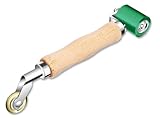
The KEDILAKE seam roller is a single silicone smoothing roller marketed for PVC, TPO and EPDM, as well as woodworking and flooring. That cross-category positioning is the point: it is a general-purpose smoothing roller rather than a specialist roofing tool, which makes it a sensible pick for someone whose work crosses membrane roofing, vinyl flooring and woodworking veneer pressing.
Who it suits: the multi-trade user. If you install TPO one week and press flooring the next, a roller rated across those materials saves you buying two tools. It also suits the homeowner doing EPDM, where a single silicone roller and some contact adhesive is the whole workflow and a brass detail roller is less critical.
- Type: Single silicone seam roller
- Membrane compatibility: PVC, TPO, EPDM
- Other uses: Woodworking, flooring
- Wheel material: Silicone
- Format: Single roller with handle
- Brand: KEDILAKE
- Price tier: Mid-range
The strengths here are breadth and simplicity. One tool, one wheel, no decision about which end to use. The PVC/TPO/EPDM rating means it is intended for exactly the three membranes most commonly welded on flat roofs, so you are not guessing about compatibility. The silicone wheel gives clean release on hot welds. And the crossover into flooring and woodworking means the tool is not idle between roofing jobs, which matters if you are buying it for occasional use.
Pros
- Rated for PVC, TPO and EPDM
- Single-tool simplicity
- Crossover use in flooring and woodworking
- Mid-range pricing
- Silicone wheel releases cleanly from hot membrane
Cons
- No brass detail roller, so corners need a separate tool
- General-purpose design rather than roofing-specific
- No seam tester included
- One wheel width only
Compared with the nearest alternative, the QWORK 40mm silicone roller, the KEDILAKE is the better buy if you want crossover use and the QWORK is the better buy if you want a dedicated roofing roller with a clear 40mm specification. Both are single silicone rollers at the mid-range or budget tier. If your work is exclusively roofing, the QWORK is the more focused tool. If you also press flooring or veneer, the KEDILAKE’s broader rating is the tiebreaker.
QWORK 40mm Silicone Seam Roller with 6mm Brass Detail Penny Roller – Best for a Spare Detail Roller

This QWORK set is the single-set version of the layout: a 40mm silicone seam roller paired with a 6mm brass detail penny roller, sold as a smoothing seam roller tool for single ply work. It is the mid-range counterpart to the premium two-piece QWORK set, and it suits anyone who wants the same two-tool layout without paying the premium tier price for it.
Who it suits: the installer who already owns one good roller and wants a second set as a backup or for a second crew member, and the budget-conscious pro who wants the correct two-wheel combination without extra packaging. It is also a sensible pick for a homeowner who wants the detail roller specifically and is happy to treat the silicone roller as a bonus.
- Type: Two-piece seam roller set
- Main wheel: 40mm silicone
- Detail wheel: 6mm brass detail penny roller
- Purpose: Smoothing seam roller tool for single ply
- Brand: QWORK
- Price tier: Mid-range
The strength is the same as its premium sibling: the right wheels for the right jobs, at a lower price tier. You get a 40mm silicone wheel for the main seam and a 6mm brass penny roller for detail work, which is the combination most single ply installers actually need. As separate tools, each can be used independently, and the brass roller can live in a pocket while the silicone roller does the long runs. Being mid-range rather than premium, it is also a reasonable second set to keep in the truck as a spare, so a broken or lost roller does not stop the job.
Pros
- Correct 40mm silicone plus 6mm brass combination
- Mid-range tier rather than premium
- Two independent tools
- Good candidate as a spare or second set
- Silicone and brass are the established materials for this job
Cons
- No seam tester included
- Two tools to carry and track
- Mid-range build may not survive the heaviest daily commercial use
- Overlaps heavily with the premium QWORK set, so the upgrade is packaging, not capability
Compared with the nearest alternative, the premium QWORK 2 Pcs set, the difference is price tier and presentation rather than the working ends. Both give you a 40mm silicone roller and a 6mm brass penny roller. If you are buying for a single job or want a spare set, this mid-range version is the more sensible purchase. If you want the tool you will still be using in three years, the premium set is the one to choose. Against the KOBSAINF 40mm plus 6mm set, the two are functionally very similar and the decision comes down to availability and price at the time you buy.
CraftyDream 2 Pcs Seam Roller with Tester Probe and Dual Roller for PVC TPO – Best for Weld Verification

The CraftyDream set combines two seam rollers with a tester probe in a single purchase. The dual roller design covers the main seam and detail work, and the tester probe is the quality-control piece that most roller kits leave out. For anyone who cares about proving the weld is complete rather than assuming it, that inclusion is the whole reason to choose this set over a cheaper roller-only kit.
Who it suits: the installer who has had a seam fail and does not want it to happen again, and any contractor who wants a documented, checkable weld on every job. It is also a good choice for a homeowner doing their first flat roof, because a tester probe turns an invisible process into something you can verify before the job is closed up.
- Type: Two-piece roller set with tester probe
- Rollers: Dual roller design
- Included: Tester probe
- Membrane compatibility: PVC, TPO
- Brand: CraftyDream
- Price tier: Premium
The strength is completeness. The rollers handle the seam and the detail work, and the tester probe handles verification. A blunt probe run along a seam will catch an incomplete weld before the membrane is covered or finished, which is exactly when it is cheapest to fix. The dual roller design is intended to cover both wide and narrow rolling without a separate tool, and the PVC/TPO rating keeps it focused on the membranes where hot-air welding is standard. Premium tier pricing reflects the extra tool in the kit as much as the rollers themselves.
Pros
- Tester probe included, so welds can be verified
- Dual roller design covers wide and detail work
- Rated for PVC and TPO
- Turns seam quality into a checkable step
- Good first kit for a serious DIY flat roof project
Cons
- Premium pricing
- Fewer independent tools than a four-piece kit
- Tester probe is a check tool, not a repair tool
- Dual roller design may not reach the tightest corners the way a 6mm penny roller does
Compared with the nearest alternative, the QWORK kit with 40mm silicone, detail penny roller and seam tester, the two are aiming at the same user with slightly different packaging. The QWORK kit separates the wheels more clearly into a 40mm silicone roller and a brass detail penny roller, which is the more conventional roofing layout, while the CraftyDream uses a dual roller design. Both include a tester. If you want the familiar 40mm plus 6mm brass combination, the QWORK kit is the more predictable choice; if you want the tester and a compact dual roller, CraftyDream is the alternative. Against the Zimpty ZY890, which integrates the tester into the roller itself, CraftyDream keeps the tester as a separate probe, which some users find easier to control.
Kooingtech Brass Seam Roller 6mm Detail Penny – Best for Detail Work Only

The Kooingtech brass seam roller is a 6mm brass detail penny roller for roofing, and nothing else. It is a single-purpose detail tool: no silicone wheel, no tester, no kit. That narrowness is the point. If your main seam is already handled by another roller and what you are missing is a proper brass penny roller for corners and terminations, this is the cheapest way to fill the gap.
Who it suits: the installer who already owns a 40mm silicone roller and has been improvising on corners. It also suits anyone who does a lot of detail-heavy work, such as numerous penetrations, pipe boots and short seams, where a brass penny roller gets more use than a wide wheel. And it is a sensible spare to keep in a pouch so a brass detail roller is always on hand.
- Type: Brass detail penny roller
- Wheel: 6mm brass detail penny
- Purpose: Detail work on roofing seams
- Format: Single tool
- Brand: KooingTech
- Price tier: Budget
The strength is specificity and price. A 6mm brass wheel is the correct geometry for tight corners, T-joints and terminations, and brass holds its edge and transmits pressure far better than a soft wheel would at that diameter. At the budget tier it costs little to add to an existing kit, and because it is a single small tool it lives easily in a pouch or pocket. For a job with a lot of detail work, it may see more actual use than the wide roller.
Pros
- Correct 6mm brass geometry for tight detail work
- Budget pricing
- Small and easy to keep on hand
- Complements any existing 40mm silicone roller
- Brass holds shape under pressure
Cons
- Not usable for main lap seams
- No silicone roller included
- No tester included
- Single tool means it cannot replace a kit
Compared with the nearest alternative, the KOBSAINF 40mm silicone plus 6mm brass detail set, this Kooingtech tool is a component rather than a system. KOBSAINF gives you both wheels for not much more in tier terms; Kooingtech gives you the detail half at the lowest possible price. If you need both wheels, buy the set. If you only need the brass detail roller, buying the set means paying for a silicone roller you may not use, which makes this single brass tool the more efficient purchase.
KOBSAINF 40mm Silicone Seam Roller + 6mm Brass Detail Roller – Best for One-Pass Lap Seams

The KOBSAINF set pairs a 40mm silicone seam roller with a 6mm brass detail roller for roofing. It is a straightforward, roofing-focused two-piece kit: the silicone wheel for the main lap, the brass wheel for detail. Nothing about the layout is unusual, and that is a feature, because the 40mm plus 6mm brass combination is the established standard for single ply seam work.
Who it suits: the part-time or full-time installer who wants the standard combination without premium pricing, and who does not need a tester bundled in. It is also a good primary kit for a homeowner tackling a TPO or PVC flat roof who wants both wheels and is willing to buy a tester separately if needed.
- Type: Two-piece seam roller set
- Main wheel: 40mm silicone
- Detail wheel: 6mm brass detail roller
- Purpose: Roofing seam rolling
- Brand: KOBSAINF
- Price tier: Mid-range
The strength is the correct standard layout at a mid-range tier. A 40mm silicone wheel covers a standard lap in one or two passes, and the 6mm brass roller handles the corners that the wide wheel cannot. As separate tools, each can be used independently, so the brass roller can be held in reserve while the silicone roller does the long runs. The roofing-specific positioning means it is sold for this job rather than as a general-purpose smoothing roller, which is a small but real signal about intended use.
Pros
- Standard 40mm plus 6mm brass layout
- Mid-range pricing
- Roofing-specific design
- Two independent tools
- Silicone and brass are correct for TPO and PVC work
Cons
- No tester included
- Overlaps with several other mid-range sets in this list
- Two tools to carry
- Wheel quality is hard to judge from a listing
Compared with the nearest alternative, the QWORK 40mm plus 6mm brass set, the two are close enough that the decision usually comes down to what is in stock and the price on the day. Both give the standard layout at the mid-range tier. If you have a preference for the QWORK brand because you already own other QWORK tools and want a consistent kit, choose that; if not, KOBSAINF is an equally reasonable version of the same idea. Against the premium QWORK two-piece set, both mid-range options give up some build quality in exchange for a lower tier, which is a fair trade for occasional use.
QWORK Seam Roller Kit with 40mm Silicone, Detail Penny Roller & Seam Tester – Best for a Complete Workflow

The QWORK seam roller kit brings together a 40mm silicone seam roller, a detail penny roller and a seam tester in one purchase. That third item is what separates this kit from the roller-only sets: it gives you a way to verify the weld rather than assume it. For an installer building a first proper seam kit, or a homeowner who wants to be sure the job is done correctly before closing it up, the tester is worth more than the difference between mid-range and premium tier.
Who it suits: anyone doing a complete single ply job from weld to verification, especially someone who does not already own a seam tester. It is also a good choice for a contractor standardising kits across a small crew, because each installer gets the same three tools.
- Type: Three-piece seam kit
- Main wheel: 40mm silicone seam roller
- Detail wheel: Detail penny roller
- Included: Seam tester
- Purpose: Single ply roofing seam work
- Brand: QWORK
- Price tier: Mid-range
The strength is completeness at a mid-range tier. You get the wide silicone roller for the main seam, the detail penny roller for corners, and the tester for verification. That covers the full sequence, from making the seam to checking it, without a second purchase. The 40mm silicone width is correct for standard laps, the detail roller handles the tight work, and the tester catches incomplete welds while they are still fixable. Bundling all three also means all three are in the same place when the job starts, which reduces the chance that the tester gets left in the van on the one day it was needed.
Pros
- Includes a seam tester for weld verification
- 40mm silicone roller plus detail penny roller
- Mid-range tier despite the extra tool
- Covers the full weld-and-check workflow
- Good standardised kit for a small crew
Cons
- Detail roller is described as a penny roller without a stated width
- Three items to carry and keep track of
- Mid-range build rather than heavy-duty commercial grade
- Tester is a check tool only, not a repair tool
Compared with the nearest alternative, the CraftyDream set with tester probe, both kits include verification. The difference is in the roller arrangement: QWORK separates the 40mm silicone roller from the detail penny roller, which is the conventional roofing layout, while CraftyDream uses a dual roller design. If you want the familiar two-tool approach plus a tester, this QWORK kit is the more predictable buy. Against the roller-only QWORK sets, the extra cost here buys the tester, which is the single most useful addition to a seam kit. If you already own a tester, buy the roller-only set instead.
Huyopu Seam Rollers 40mm Silicone with 6mm Brass Detail Penny Roller – Best Budget DIY Pick

The Huyopu set is a 40mm silicone smoothing seam roller with a 6mm brass detail penny roller, sold as a 2-in-1 welding tool. It delivers the standard two-wheel layout at the lowest price tier in this roundup, which makes it the obvious choice for a one-off project where the tool only needs to survive one roof.
Who it suits: the homeowner installing or repairing a single small flat roof, shed or garage. It is also a reasonable backup set to keep in a truck, or a second set for a helper who only occasionally rolls seams. It is not aimed at a crew running seam footage every day.
- Type: Two-piece seam roller set
- Main wheel: 40mm silicone
- Detail wheel: 6mm brass detail penny roller
- Format: 2-in-1 welding tool
- Brand: Huyopu
- Price tier: Budget
The strength is value. You get the correct 40mm silicone and 6mm brass combination, which is the same working layout as sets costing several tiers more, at budget pricing. For a single roof, that is exactly the right trade: the wheels are the right size and the right material, and the tool does not need to survive a decade of commercial use. The 2-in-1 description also signals that it is meant to cover the main seam and the detail work in one purchase.
Pros
- Lowest price tier for the standard two-wheel layout
- Correct 40mm silicone and 6mm brass sizes
- 2-in-1 design covers main seam and detail
- Suits one-off DIY flat roof projects
- Cheap enough to keep as a spare set
Cons
- Budget build quality, unlikely to suit daily commercial use
- No tester included
- Wheel durability is the first thing to suffer at this tier
- Two tools to track on the roof
Compared with the nearest alternative, the SUGOOE double-headed seam roller, the Huyopu set uses two separate tools while SUGOOE puts both wheels on one head. SUGOOE’s silicone wheel is 1.57 inch (about 40mm) and its brass wheel is 1.18 inch (about 30mm), so it trades the true 6mm detail geometry for a larger brass wheel in a single-tool format. If you want genuine 6mm detail capability, the Huyopu set is the better budget choice. If you want one tool and accept a compromise on detail reach, SUGOOE is the alternative. Against the Kooingtech single brass roller, Huyopu costs more but includes the silicone roller, which you almost certainly need.
SUGOOE Double-Headed Seam Roller – Best Budget Single-Tool Option

The SUGOOE double-headed seam roller puts a 1.57 inch high temperature waterproof silicone roller on one head and a 1.18 inch brass wheel on the other. One tool, two wheels, budget pricing. It is the cheapest way to get both a wide silicone roller and a brass wheel on the same shaft.
Who it suits: the budget-conscious buyer who wants one tool rather than two, and who accepts that the brass wheel at about 30mm is not a true 6mm penny roller. It suits general seam rolling where the detail work is not extremely tight, and it works as a starter tool for someone who is not sure how much roofing they will do.
- Type: Double-headed seam roller
- Wide head: 1.57 inch (about 40mm) silicone roller
- Narrow head: 1.18 inch (about 30mm) brass wheel
- Feature: High temperature, waterproof
- Format: Single shaft, two heads
- Brand: SUGOOE
- Price tier: Budget
The strength is convenience at a low price. One tool means nothing to lose, and the silicone head is the right width class for standard lap seams at about 40mm. The brass head at about 30mm is larger than a penny roller, which makes it faster on medium-detail work but less capable in genuinely tight corners. The high temperature and waterproof claims are relevant because a seam roller operates on a freshly welded membrane, though the exact temperature rating is not stated in the listing.
Pros
- Single tool with both wide silicone and brass wheels
- Budget pricing
- Silicone head is about 40mm, correct for standard laps
- Brass head covers medium detail work
- Nothing to set down or lose
Cons
- Brass wheel at about 30mm is not a true 6mm detail penny roller
- No tester included
- Budget build quality
- Single tool means one wheel width for the main seam
Compared with the nearest alternative, the Huyopu 40mm plus 6mm set, the trade is clear: SUGOOE gives you one tool and a larger brass wheel at budget pricing, while Huyopu gives you two tools and a genuine 6mm detail roller at the same tier. If your job has real corners, boots and terminations, Huyopu is the better buy. If your seams are mostly straight runs with mild detail, SUGOOE’s single-tool convenience wins. Against the Everhard double-end roller, SUGOOE is the budget version of the same idea, with the narrower brass wheel being the main functional difference.
QWORK Silicone Seam Roller 40mm High Temperature Resistant – Best Single-Purpose Silicone Roller

The QWORK silicone seam roller is a single 40mm high temperature resistant silicone hand pressure roller for welding work. No brass wheel, no tester, no kit. It is the purest expression of the main seam tool: one wheel, the right material, the right width.
Who it suits: the EPDM installer using contact adhesive, who needs a wide silicone roller to press the lap into the adhesive and has no use for a brass detail wheel. It also suits anyone who already owns a brass detail roller and a tester and simply wants a second or replacement 40mm silicone roller.
- Type: Single silicone seam roller
- Wheel: 40mm silicone
- Feature: High temperature resistant
- Format: Hand pressure roller
- Brand: QWORK
- Price tier: Budget
The strength is focus. A 40mm silicone wheel is the correct main-seam tool for heat-welded TPO and PVC, and high temperature resistance is the property that keeps the wheel working on a freshly welded seam without sticking or deforming. For EPDM contact-adhesive work, the silicone wheel presses the lap evenly into the adhesive, and the 40mm width matches a standard lap. At the budget tier, it is a low-cost way to own the correct main roller, and it can serve as a spare or a replacement without buying a whole new kit.
Pros
- Correct 40mm silicone wheel for main seam work
- High temperature resistant
- Budget pricing
- Simple, single-purpose tool
- Useful as a spare or replacement roller
Cons
- No brass detail roller
- No tester
- Only one wheel width
- Not a complete kit for a full single ply job
Compared with the nearest alternative, the KEDILAKE single silicone roller, the two are both single-wheel silicone tools. The QWORK is the more focused roofing option with a clear 40mm specification, while the KEDILAKE adds crossover use in flooring and woodworking. If you only roll single ply seams, QWORK is the better-focused tool; if you want the roller to earn its keep in other trades, KEDILAKE is the alternative. Against the single-set QWORK 40mm plus 6mm brass roller, this tool is one wheel short of a kit, so buy it only if you already own the detail roller.
Zimpty ZY890 Double-End Seam Roller and Tester Combo – Best Premium All-in-One
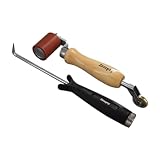
The Zimpty ZY890 is a double-end seam roller combining a silicone roller and a brass detail penny roller with an integrated seam tester probe. In one tool you get the main seam wheel, the detail wheel and the verification tool. For a full-time installer who wants everything in one hand, that integration is the standout feature in this entire roundup.
Who it suits: the professional who wants to check every seam without carrying a separate tester, and who values having the main seam wheel, the detail wheel and the tester all reachable in one motion. It also suits the quality-focused homeowner who wants to verify their own work on a single important roof.
- Type: Double-end roller with integrated tester
- Main end: Silicone roller
- Detail end: Brass detail penny roller
- Included: Seam tester probe
- Model: ZY890
- Brand: Zimpty
- Price tier: Premium
The strength is integration. The double-end design handles the main seam and the detail work on one shaft, and the tester probe means verification is always available rather than left in the truck. On a job where a seam needs checking every few feet, having the tester built into the tool you are already holding removes the friction that causes installers to skip verification. Zimpty’s premium positioning signals a build intended for regular professional use, and the combination of silicone and brass on one shaft covers both the wide lap and the tight corner.
Pros
- Silicone roller, brass detail roller and tester in one tool
- Double-end format means nothing to set down
- Verification is always within reach
- Covers main seam and detail work
- Premium build aimed at regular professional use
Cons
- Premium pricing
- Single shaft means only one wheel width for the main seam
- If any one element wears, the whole tool is affected
- Integrated tester is less controllable than a separate probe for some users
Compared with the nearest alternative, the Everhard MR13140 double-end roller, the Zimpty wins on the tester and loses on simplicity. Everhard gives you the same two working ends without the tester, which is lighter and cheaper and better if you already carry a tester. Zimpty gives you the tester built in, which is better if you do not. Against the CraftyDream set, which also includes a tester but keeps it as a separate probe, the Zimpty’s integration is a workflow advantage and the CraftyDream’s separate probe is a control advantage. For a crew that checks seams constantly, Zimpty is the pick. For an installer who checks occasionally and prefers a separate probe, CraftyDream or the QWORK kit is the better value.
Frequently Asked Questions
What width seam roller do I need for single ply roofing?
For the main lap seam, a 40mm silicone roller is the standard because it covers a typical 40mm to 80mm heat-welded lap in one or two passes. For detail work such as corners, T-joints and pipe boots, a 6mm brass detail penny roller is the correct size because it fits into radii a 40mm wheel cannot reach. Most complete kits pair exactly these two sizes, and that combination covers the vast majority of single ply seam work.
Should I use a silicone roller or a brass roller?
Both, for different jobs. Silicone is the main seam material because it releases cleanly from hot TPO and PVC without sticking or smearing, and it tolerates the surface temperature of a freshly welded seam. Brass is the detail material because a small brass wheel holds its edge and transmits pressure through a narrow contact patch into corners where a wide silicone wheel will not fit. Using brass on the main lap is slow and inconsistent; using silicone alone leaves corners incomplete.
Do I need a seam tester, or is a roller enough?
A roller alone makes the seam but does not prove it is complete. A seam tester is a blunt probe used to check the weld along its length; if the seam opens under light probing, the weld is incomplete and needs re-welding. Kits that include a tester, such as the CraftyDream set, the QWORK kit and the Zimpty ZY890, let you verify every seam before the job is closed up, which is when a repair is cheapest.
Can I use the same seam roller on TPO, PVC and EPDM?
Silicone rollers are commonly rated for PVC, TPO and EPDM, so a single silicone tool will usually cover all three. The workflow differs, though: TPO and PVC are typically heat welded and the roller consolidates a hot seam, while EPDM is often bonded with contact adhesive and the roller presses the lap into the adhesive. In both cases the silicone wheel is doing the work; the difference is the heat source and the adhesive, not the roller.
How much pressure should I apply when rolling a seam?
Consistent, moderate pressure is the goal: enough to consolidate the weld along its full width, not enough to leave a visible groove or thin the membrane. A smaller-diameter wheel concentrates force, so a 6mm brass penny roller needs far less hand pressure than a 40mm silicone wheel to achieve the same seam consolidation. The common mistake is over-pressuring the first foot of a seam and under-pressuring the last, which is why a tester check along the whole length matters.
Why do seam rollers have two ends or come as two-piece sets?
Because a single wheel cannot do both jobs well. A 40mm silicone wheel is right for the wide lap and wrong for a tight corner, and a 6mm brass wheel is right for the corner and useless across a wide lap. Double-ended tools put both wheels on one shaft so nothing gets set down, while two-piece sets give you two independent tools that can be used in either hand or separated between installers. The choice is workflow preference rather than capability.
What wears out first on a seam roller?
The silicone wheel. Silicone is a soft material chosen for its release properties, and repeated contact with hot membrane gradually degrades the surface, which can leave marks or reduce its ability to press evenly. On a budget roller used heavily, the wheel is the first component to show wear. Brass detail rollers wear far more slowly because brass holds its shape. Buying a set with two independent tools, or a tool where the silicone wheel is replaceable, extends the working life of the kit.
Is a budget seam roller good enough for a DIY flat roof?
For a single small roof, yes. The correct wheel sizes and materials matter more than the price tier: a budget 40mm silicone roller with a 6mm brass detail roller will make a sound seam on one shed or garage roof. What the budget tier gives up is durability on repeated use, so it is the right choice for a one-off project and the wrong choice for a crew that rolls seams every week. If you are doing one roof and want verification, spend the extra on a kit that includes a seam tester.
Which Seam Roller Should You Buy?
If you want one purchase that covers a typical single ply job properly, the QWORK 2 Pcs 40mm Silicone Seam Roller with 6mm Brass Detail Penny Roller is the overall pick: the right widths, the right materials, and two independent tools you can use in either hand. Add a seam tester separately if your kit does not include one.
If you are rolling a single shed or garage roof on a tight budget, buy the Huyopu 40mm plus 6mm brass set. It gives you the correct working layout for one job at the lowest tier, and if the roof is EPDM bonded with adhesive, the QWORK 40mm silicone roller alone is enough.
If you install professionally and roll seams most days, choose a double-ended design: the Everhard MR13140 if you already carry a tester, or the Zimpty ZY890 if you want the tester built into the tool. If you want verification in the same box as the rollers and prefer a separate probe, the QWORK seam roller kit with tester or the CraftyDream set with tester probe are the two best-value complete kits. And if corners and penetrations dominate your job, add the Kooingtech 6mm brass detail roller to whatever wide roller you already own.