Key takeaways
- The best stylus cleaning brushes, gel pads and fluid kits compared, plus the back-to-front technique that keeps a needle clean and a cantilever safe.
Every record you play plows a small harvest of dust, lint and groove grit onto the stylus tip. The build-up is gradual: the top end dulls, voices lose their edge, and a familiar pressing starts to sound tired. Most owners blame the record or assume the needle is worn out, when the real fault is a dirty tip that a two-minute clean would fix. A clean stylus also matters for the records, because a tip riding on compacted grit no longer traces the groove the way it was cut to.
This guide is about the needle only. Record brushes, vinyl cleaning fluids and setup tools such as force gauges and protractors are separate kits, covered in their own guides on this site. The five picks divide into the three honest ways of cleaning a stylus: a dry brush, a gel pad you dip the tip into, and a brush-and-fluid kit for baked-on grime. Every dimension quoted is a maker figure, and the technique notes in How to Choose matter more than any single pick, because a cleaner used the wrong way can do more harm than the dirt it removes.
Disclosure: As an Amazon Associate, I earn from qualifying purchases.
How to Choose a Stylus Cleaning Brush or Kit
Technique decides safety, and direction is the whole technique. A stylus brush moves from the back of the cartridge toward the front, in the same direction the record travels under the tip, and in that direction only. Never brush side to side, and never push front to back against the cantilever. A sideways swipe can bend the cantilever — the thin rod that carries the diamond — and a bent cantilever means mistracking, channel imbalance and a replacement stylus. Audio-Technica prints the rule in its own manuals: clean the tip by moving the brush from the rear to the front of the stylus, with no side-to-side movement. Use the cueing lever rather than guiding the cartridge by hand whenever the deck allows it, keep each stroke light, and lift the brush clear between strokes.
Gel pads clean by dipping, never by dragging. A gel cleaner works when the stylus is lowered straight down into the pad and lifted straight back up; the soft gel grabs the dirt and lets go of the tip. Dragging the cartridge across the gel, or twisting as you lift, stresses the cantilever sideways, which is exactly the load it tolerates worst. The second half of gel discipline is the pad itself: a pad left dirty redeposits grit on the next dip, so last week’s dirt goes straight back onto the tip. Rinse the gel under water as the maker directs, let it dry fully, keep the lid on between uses, and dip into a fresh area rather than the same speckled spot.
Liquids are maker-specific, so the cartridge manual outranks the bottle. A fluid cleaner dissolves the oily, baked-on residue that dry brushing leaves behind, and for that job it earns its place. But stylus fluids are not interchangeable household solvents, and some cartridge makers warn against liquid cleaners altogether: fluid can wick up the cantilever, soften the adhesive that bonds the diamond, or attack the suspension. Read your cartridge maker’s guidance before any bottle touches the tip, use the smallest amount that wets the brush, and keep liquid off the cartridge body. If the manual says dry cleaning only, that settles it — no fluid pick below overrides it.
Clean before you diagnose. A dirty stylus sounds like a worn record: dull, fuzzy, prone to skating across loud passages. It can also mimic a worn-out needle. So the order of operations is always clean first, then listen again with a record you know well. If a thorough clean restores the sound, nothing was worn. If it does not, only then is it worth suspecting the tip itself, which is a replacement question rather than a cleaning one.
Match the tool to the routine. A dry brush suits a quick pass every few sides. A gel pad suits owners who want a no-liquid habit they will actually keep. A brush-and-fluid kit suits collections full of second-hand records, whose grit fouls a tip fastest. Many listeners end up owning one dry method and one rescue method; what matters is that the daily one is gentle enough to use without thinking twice.
The 5 Best Stylus Cleaning Brushes and Kits
1. Onzow Zerodust — the original gel dip pad

The Zerodust is the product that made gel cleaning mainstream: a dome of ultra-soft polymer in a small hinged case, made in Japan. Set the open case on the platter or beside it, lower the stylus into the dome with the cueing lever, and lift; the gel holds the dirt and releases the tip. There is no brush, no fluid and nothing to swipe, which makes it the easiest method to use correctly every time. The gel rinses clean under water, so one pad serves for years of dips. Its limits are the limits of the method: it lifts loose and lightly stuck debris well, but it will not dissolve the varnished residue that months of dirty records bake onto a tip. Keep it for the daily habit, as the first step before reaching for anything stronger.
Specs
- Maker: Onzow (Japan)
- Type: gel dip pad in a hinged case
- Material: ultra-soft polymer gel (maker figure)
- Method: lower the stylus straight in, lift straight out
- Care: rinse under water and air dry
- See it on Amazon
2. GrooveWasher SC1 Stylus Cleaning Kit — brush and fluid for baked-on grime

The SC1 is the rescue kit of this roundup: a brush and a small dropper bottle of SC1 stylus fluid, made by GrooveWasher in Kansas City, Missouri. The brush is the standout hardware — a 4.6-inch curved handle with dense, soft nylon bristles, long enough to reach the tip with your hand clear of the cartridge, and shaped to approach from behind so the natural stroke runs back to front. Used dry, it flicks away lint and dust; with a drop or two of fluid on the bristles, it works on the oily pressing compound and sticky residue that new and vintage records leave behind. This is the pick for owners of second-hand collections, with the standing warning from How to Choose: check the cartridge maker’s guidance on fluids first, because the manual outranks the bottle.
Specs
- Maker: GrooveWasher LLC (Kansas City, Missouri, USA)
- Contents: stylus brush plus 0.5 fl oz SC1 fluid dropper bottle
- Brush: 4.6 in curved handle, dense nylon bristles (maker figures)
- Method: dry, or damp with SC1 fluid, back to front only
- Model: GWSC1K
- See it on Amazon
3. Pro-Ject Clean It — the carbon fibre daily brush

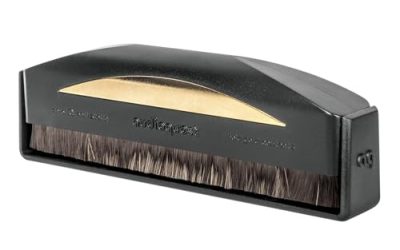
Pro-Ject’s Clean It is the simplest tool here: a small brush whose head carries thousands of fine carbon fibres, made by a company that builds the turntables the brush will serve. Carbon fibre is soft enough for a diamond tip, fine enough to get under it, and the fibres are conductive, so a pass also bleeds off static rather than adding to it. Pro-Ject positions it for daily cleaning, and that is the right rhythm — a couple of gentle back-to-front strokes before a session keeps dust from ever compacting. Pro-Ject publishes no stroke direction of its own, so follow the universal rule and your cartridge maker’s advice: rear to front, never sideways. As a dry-only tool it moves loose dirt and does nothing for dissolved grime, which is a job for the gel or the fluid kit.
Specs
- Maker: Pro-Ject Audio Systems
- Type: carbon fibre stylus brush
- Fibres: conductive carbon fibre (maker figure)
- Method: dry strokes, back to front only
- Intended use: daily cleaning (maker guidance)
- See it on Amazon
4. Hudson Hi-Fi Stylus Cleaning Gel — the washable gel bubble
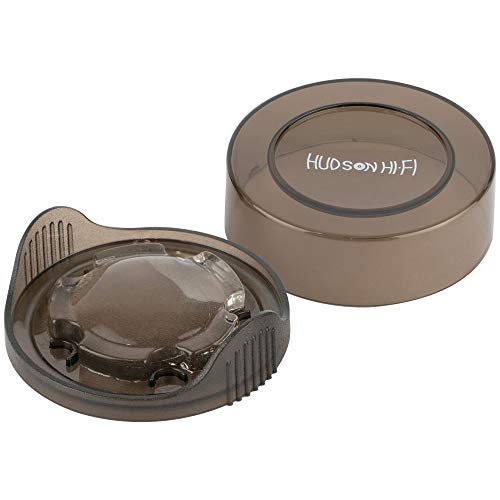
Hudson Hi-Fi’s gel takes the same dip method as the Zerodust and packages it as a clear gel bubble in a small round case. Lower the stylus onto the bubble, lift, and the anti-static gel holds the dust; when the surface loads up, the gel washes clean with water and goes back to work, which keeps the pad from becoming the grit reservoir described in How to Choose. The maker’s model name is Clean StylusGel, and Hudson Hi-Fi backs it with a two-year replacement promise handled through the maker. Between this and the Onzow, the honest difference is presentation and maker support rather than method — both ask for the same straight-down, straight-up dip, and both fail the same way if you drag. Keep whichever you buy rinsed and lidded.
Specs
- Maker: Hudson Hi-Fi
- Type: gel dip pad (bubble format)
- Model: Clean StylusGel (maker figure)
- Method: lower the stylus straight in, lift straight out
- Care: washable and reusable (maker figure)
- See it on Amazon
5. Boundless Audio Stylus Cleaner Brush — the long-handle carbon brush

Boundless Audio’s stylus brush (model BA-SCB02) is a carbon fiber brush on a slim handle about 11.3 cm long, weighing only 9 g by the maker’s listing. The length is the point: it keeps fingers away from the headshell and gives a steadier, lighter touch than the stubby brushes bundled with many cartridges, which matters when the whole job is two gentle strokes. The carbon fiber bristles are anti-static by the maker’s description, so the brush suits the quick pass between sides as much as a start-of-session clean. It is a dry brush only, so it pairs naturally with one of the gel picks above as the second half of a routine. Give it the same directional discipline as every brush here: back to front, lift clear, done.
Specs
- Maker: Boundless Audio
- Type: carbon fiber stylus brush
- Model: BA-SCB02
- Dimensions: 11.3 x 0.7 x 1.4 cm (maker figures)
- Weight: 9 g (maker figure)
- See it on Amazon
Comparison Table
| Product | Method | Fluid included | Care routine | Best for |
|---|---|---|---|---|
| Onzow Zerodust | Gel dip pad | No | Rinse gel under water | A no-brush daily habit |
| GrooveWasher SC1 Kit | Brush, dry or with fluid | Yes, 0.5 fl oz | Keep bristles clean, cap the bottle | Baked-on grime, used records |
| Pro-Ject Clean It | Carbon fibre brush | No | Shake out dust | A quick daily dry pass |
| Hudson Hi-Fi Stylus Cleaning Gel | Gel dip pad | No | Wash gel, keep lidded | A washable gel routine |
| Boundless Audio Stylus Brush | Carbon fiber brush | No | Shake out dust | Reach and a light touch |
FAQ
How often should I clean the stylus?
Little and often beats rare and thorough. A quick dry pass or a single gel dip every few sides keeps dust from compacting into the hard crust that needs fluid to shift. Collections heavy on second-hand records foul a tip faster, so clean more often, and always clean before judging the sound of an unfamiliar pressing.
Can I brush the stylus in any direction?
No. Brush from the back of the cartridge toward the front only, following the direction the record travels under the tip. A sideways stroke, or one pushed front to back, loads the cantilever in the directions it tolerates worst and can bend it. The same discipline applies to a fluid-dampened brush.
Is liquid stylus cleaner safe for every cartridge?
No, and the cartridge maker has the final word. Some makers warn that fluids can wick up the cantilever and soften the bond holding the diamond or affect the suspension, and a few specify dry cleaning only. Check the manual for your cartridge before using any fluid, use the least amount possible, and keep liquid off the cartridge body.
My records sound dull and fuzzy — is the stylus dirty or worn out?
Clean first, then decide. A tip carrying compacted grit sounds dull, fuzzy and prone to mistracking, which is easily mistaken for a worn record or a worn needle. Give the stylus a proper clean with the methods above and replay a record you know well. If the sound comes back, the tip was simply dirty; if it does not, the stylus itself becomes the suspect.
Conclusion
Stylus cleaning is the cheapest sound upgrade in vinyl playback, and the safest when the technique is right: brushes travel back to front and never sideways, gel pads are dipped and never dragged, pads get rinsed before they can hand the grit back, and fluids wait for the cartridge maker’s permission. Pick the method you will actually use daily — the Zerodust or Hudson Hi-Fi gel for a dip, the Pro-Ject or Boundless Audio brush for a dry pass — and keep the GrooveWasher SC1 in reserve for the day a filthy second-hand find bakes something onto the tip.
More from Amazon
Programs that pair well with the guide above. Offers and eligibility are set by Amazon and may change.
Free shipping on eligible items, Prime Video and more. Eligible new members can start with a free trial.
Start a Prime free trialAd-free music streaming. Eligible new subscribers can start with a free trial.
Try Music Unlimited freeA Prime membership for ages 18-24 with a trial period. Eligibility is set by Amazon.
See Prime for Young AdultsAudiobooks and podcasts to listen to on the go. Eligible new members can start with a free trial.
Try Audible freeAs an Amazon Associate we earn from qualifying purchases.