Key takeaways
- Measure the furniture and doorway: A 75-inch television is about 65 inches wide, while an 85-inch model is roughly 74 inches wide. Add space for the stand and ventilation.
- Do not remove the screen film with a sharp object: Use a clean, dry microfiber cloth. For fingerprints, lightly dampen the cloth with distilled water rather than spraying the panel.
- Avoid excessive pressure: LCD layers can be damaged by pressing, twisting or cleaning in circles with paper towels.
- Allow airflow: Keep vents clear and do not place a powerful soundbar directly against the screen or ventilation openings.
- Use the correct HDMI input: A console connected to a non-high-bandwidth port may be limited to 4K/60Hz even when the television supports 4K/120Hz or higher.
- Expect occasional software maintenance: Firmware updates can improve compatibility, but they may also reset picture settings. Photograph preferred settings before updating.
The best QLED TVs for bright, colorful home viewing are the Samsung QN90F for a polished all-round experience, the TCL QM7K for strong value and gaming, the Hisense U8QG for high-impact HDR, and the Sony BRAVIA 5 for natural-looking movies and excellent upscaling.
Our top picks


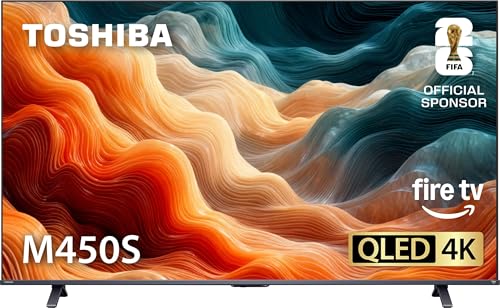

As an Amazon Associate we earn from qualifying purchases at no extra cost to you. Ratings are shown as listed on Amazon.
Best QLED TVs at a glance
| TV | Best for | Common screen sizes | Panel and backlight strengths | Gaming highlights | Typical 2026 market position |
|---|---|---|---|---|---|
| Samsung QN90F | Bright rooms and premium all-round use | 43, 50, 55, 65, 75, 85, 98 inches | QLED color, Mini LED, very strong glare handling | Up to 4K/165Hz on supported sizes; fast response | Premium |
| TCL QM7K | Value-conscious movie and gaming rooms | 55, 65, 75, 85, 98 inches | QLED color, Mini LED, high contrast | 4K/144Hz class gaming, VRR, low input lag | Upper mid-range |
| Hisense U8QG | Very bright HDR and sports viewing | 55, 65, 75, 85, 100 inches | QLED color, Mini LED, high peak brightness | 4K/165Hz class gaming on compatible inputs | Upper mid-range to premium |
| Sony BRAVIA 5 | Films, streaming and upscaling | 55, 65, 75, 85 inches | QLED color, full-array local dimming, natural processing | Up to 4K/120Hz, VRR and dedicated console features | Mid-range to upper mid-range |
Screen-size availability can vary by country and retailer. The figures above describe the model families rather than every regional configuration. Peak-brightness figures are also difficult to compare directly because manufacturers use different test windows and picture modes.
Our picks by viewing situation
Best for a sunny living room: Samsung QN90F
The Samsung QN90F is the safest choice when windows, lamps or open-plan lighting make ordinary televisions look washed out. Its Mini LED backlight gives it more control over bright and dark areas than a basic edge-lit QLED, while Samsung’s anti-reflection treatment reduces distracting reflections.
It is particularly strong for daytime sports, news and colorful streaming content. Motion handling is polished, and its wide selection of sizes makes it easier to match the screen to a small bedroom or a large family room. Samsung also offers unusually strong gaming flexibility, with high-refresh-rate support on appropriate inputs and sizes.
The trade-off is price. Like most VA-based LCD televisions, it can lose some brightness and contrast when viewed from far off-center, although the anti-reflection layer helps the picture remain usable in a wide seating area. Samsung TVs also do not support Dolby Vision, relying instead on HDR10, HDR10+ and related formats.
Best value Mini LED QLED: TCL QM7K
The TCL QM7K is the compelling middle-ground pick. It combines quantum-dot color, Mini LED local dimming, a high refresh rate and a large size range without moving into the highest premium price bracket. For many buyers, it delivers the most picture hardware per dollar.
Its strongest qualities are contrast, saturated color and gaming responsiveness. A 65-inch model is a particularly sensible choice for a mixed-use living room: large enough for cinematic viewing but generally easier to place than a 75-inch or larger set. The 85-inch and 98-inch versions suit rooms where the seating position is roughly 9 to 14 feet from the screen.
Expect some variation in shadow detail and factory calibration compared with more expensive models. Local dimming can also produce a faint halo around subtitles or bright objects on a black background. That is a limitation of LCD zone dimming, not a defect unique to TCL.
Best for spectacular HDR brightness: Hisense U8QG
The Hisense U8QG is designed for an immediately vivid picture. Its combination of quantum-dot color and Mini LED backlighting gives HDR highlights substantial impact, which is useful for bright landscapes, fireworks, animated films and daytime sports.
It is a strong choice when you sit fairly close to the television and want a large, dramatic image for the money. The 75-inch model works well in many dedicated viewing spaces, while the 100-inch version is aimed at a much larger room and should be measured carefully before purchase.
The compromise is consistency. Picture processing, motion settings and factory calibration may require more adjustment than on Sony or Samsung models. Viewing angles are also not the main reason to buy this TV: the picture is best when the principal seats are near the centerline.
Best for movies and streaming quality: Sony BRAVIA 5
The Sony BRAVIA 5 is the better choice when clean upscaling, natural skin tones and controlled motion matter more than chasing the highest possible brightness. Sony’s processing is useful for broadcast television, older HD shows and heavily compressed streams, where a less refined television may reveal more noise or jagged edges.
Its full-array local dimming improves black levels over a basic QLED, and quantum-dot color gives HDR content extra range. It supports modern console features including 4K/120Hz and variable refresh rate, although it is not as gaming-focused as the highest-refresh Samsung, TCL or Hisense options.
Choose it for a centered seating arrangement and movie-focused use. If your room has severe glare or you want the brightest possible HDR flash, the Samsung or Hisense alternatives are more suitable.
How QLED differences affect the buying decision
Brightness and HDR
“QLED” describes a quantum-dot color layer; it does not automatically mean that a TV has powerful local dimming. A low-cost QLED may be only modestly brighter than a standard LCD. For convincing HDR, look for Mini LED or full-array local dimming, a strong HDR processor and a TV that can sustain brightness rather than produce a brief peak only in a small window.
HDR10 is widely supported. Dolby Vision can provide scene-by-scene or frame-by-frame instructions, but Samsung does not include it. TCL, Hisense and Sony models commonly support Dolby Vision, depending on the region and model.
Contrast and blooming
VA-style LCD panels generally produce deeper native blacks than IPS-style panels, but they narrow the ideal viewing angle. Local dimming improves contrast by reducing the backlight behind dark portions of the picture. It cannot control every pixel independently, so subtitles, stars and white text can create halos against black.
Viewing angles
If everyone sits directly in front of the TV, prioritize contrast and brightness. If seats spread across a wide sectional sofa, an angle-enhancing layer or a television with stronger off-axis color stability may be worth the extra cost. No QLED LCD matches OLED for perfectly consistent pixel-level contrast at extreme angles, but premium Samsung models are generally more forgiving than ordinary VA LCDs.
Gaming response
For current consoles, 4K/120Hz, variable refresh rate and low input lag are the important targets. High-refresh PC gaming can benefit from 144Hz or 165Hz support, but only if the computer, cable and selected HDMI input support it. A television’s maximum refresh rate does not make a console output more than 120 frames per second.
Choose the right size for your room
| Viewing distance | Good everyday size | More cinematic choice | Typical use |
|---|---|---|---|
| 5 to 6 feet | 43 to 50 inches | 55 inches | Bedroom, office or compact apartment |
| 6 to 8 feet | 55 inches | 65 inches | Small or average living room |
| 8 to 10 feet | 65 inches | 75 inches | Average to large living room |
| 10 to 13 feet | 75 inches | 85 inches | Dedicated media room |
| 13 feet or more | 85 inches | 98 to 100 inches | Large home theater or open room |
These are practical starting points, not strict limits. A simple calculation helps: measure the seating distance in inches and divide by about 1.5 for an immersive 4K size. At 96 inches, or 8 feet, that gives roughly 64 inches, making a 65-inch TV the natural starting point.
Ownership details people often overlook
- Measure the furniture and doorway: A 75-inch television is about 65 inches wide, while an 85-inch model is roughly 74 inches wide. Add space for the stand and ventilation.
- Do not remove the screen film with a sharp object: Use a clean, dry microfiber cloth. For fingerprints, lightly dampen the cloth with distilled water rather than spraying the panel.
- Avoid excessive pressure: LCD layers can be damaged by pressing, twisting or cleaning in circles with paper towels.
- Allow airflow: Keep vents clear and do not place a powerful soundbar directly against the screen or ventilation openings.
- Use the correct HDMI input: A console connected to a non-high-bandwidth port may be limited to 4K/60Hz even when the television supports 4K/120Hz or higher.
- Expect occasional software maintenance: Firmware updates can improve compatibility, but they may also reset picture settings. Photograph preferred settings before updating.
Final buying recommendation
Buy the Samsung QN90F if your room is bright and you want the most polished all-purpose experience. Choose the TCL QM7K when value, large sizes and high-refresh gaming are priorities. Pick the Hisense U8QG for the most forceful HDR presentation in a centered seating arrangement. Choose the Sony BRAVIA 5 when streaming quality, upscaling and natural movie presentation matter more than maximum brightness.
Whichever model you select, prioritize the correct size, local dimming and HDMI features before paying extra for a higher peak-brightness number. Those choices have a larger effect on daily viewing than the QLED label alone.