Key takeaways
- Install two-step latches or locking carabiners on doors; raccoons can manipulate simple hook-and-eye hardware.
- Extend the run mesh at least 12 inches outward along the ground, or bury it 12 inches deep, to deter digging.
- Anchor the structure to the ground with stakes, earth anchors, or a substantial base in windy areas.
- Close the hens inside a solid sleeping compartment every night, even if the run is covered.
- Inspect the bottom 12 inches of mesh regularly, where rust, kicked soil, and animal pressure cause damage first.
Best Chicken Coops for a Safe Backyard Flock
The best chicken coops for backyard flocks are raised, well-ventilated, predator-resistant models with at least 4 square feet of enclosed floor space and 8 to 10 square feet of run space per standard hen.
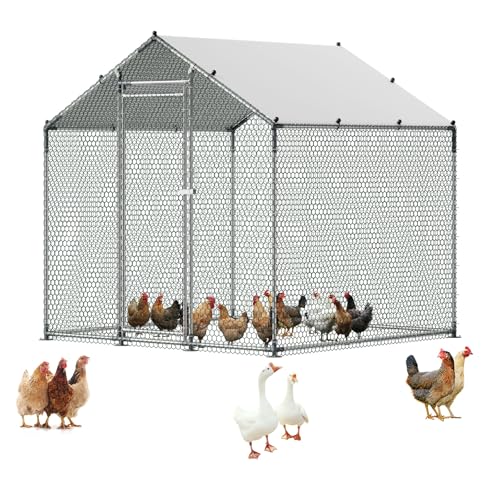
For most households, a walk-in coop-and-run combination is the best overall choice: it is easier to clean, safer to inspect, and more adaptable than a small decorative coop. A compact raised coop can work for two or three hens, while larger flocks need a full-height structure with proper roosting, nesting, and run space.
Our top picks



As an Amazon Associate we earn from qualifying purchases at no extra cost to you. Ratings are shown as listed on Amazon.
Quick comparison of backyard coop types
| Coop type | Comfortable capacity | Typical enclosed size | Predator resistance | Cleanout access | Typical assembly time | Best for |
|---|---|---|---|---|---|---|
| Raised wooden coop with attached run | 2–4 hens | 4–8 sq. ft. | Moderate after upgrades | Removable tray or side door | 2–4 hours | Small yards and first-time owners |
| Walk-in wooden coop and run | 6–10 hens | 24–40 sq. ft. | Good with buried hardware cloth | Full-height human access | 4–10 hours | Typical suburban flocks |
| Metal-frame run with weatherproof coop | 4–8 hens | 16–32 sq. ft. | Good if mesh is correctly fitted | Usually access panels and doors | 3–8 hours | Owners prioritizing durability and modularity |
| Large walk-in shed-style coop | 10–20 hens | 40–80 sq. ft. | Very good when anchored and reinforced | Full walk-in access | 1–2 days | Frequent egg collection and larger flocks |
| Portable chicken tractor | 3–6 hens | 8–20 sq. ft. | Low to moderate unless secured nightly | Lift-up panels or rear door | 2–6 hours | Moving birds across grass |
Best overall: a walk-in coop with a covered run
A walk-in design is the strongest choice for most backyard owners who have room for one. Look for roughly 24 to 40 square feet of enclosed floor area for six to ten hens, plus a run providing at least 8 square feet per hen. More space reduces crowding, feather pecking, muddy ground, and conflict around feeders.
The most useful feature is not a decorative roof or an oversized nesting box; it is human-sized access. You can remove wet bedding, inspect a sick bird, repair a latch, and collect eggs without crawling inside. A solid roof over the run also keeps the ground drier and protects feed from rain.
Choose pressure-treated or naturally durable framing for ground-contact parts, exterior-rated plywood or boards for walls, and a roof with a real overhang. Thin untreated panels can swell, split, or rot at the floor within a few seasons, especially in damp climates.
Best for small yards: a raised compact coop
A raised coop with an attached run suits two or three hens when the footprint must stay small. Elevating the sleeping area helps keep the floor drier and creates shaded space underneath, but it does not replace adequate run space. A coop advertised for six hens may only provide comfortable room for three or four once roosts, nest boxes, feeders, and winter crowding are considered.
Prioritize a large hinged roof or a full-width cleanout door. Small sliding trays are convenient, but they often remove only part of the soiled bedding. The tray should be made from galvanized metal, coated steel, or thick washable plastic; thin wood absorbs moisture and odors.
Compact coops are also more vulnerable to overheating. Ensure that ventilation openings remain above the birds’ sleeping height and are protected by welded hardware cloth rather than ordinary chicken wire.
Best for harsh weather: an insulated, well-ventilated enclosure
In cold, windy, or wet regions, weather protection matters more than heavy insulation alone. The coop should block direct drafts at roost level while allowing warm, damp air to escape near the roof. A sealed box can accumulate condensation, causing damp bedding and frost-related problems even when the walls are insulated.
Useful features include a sloped waterproof roof, wide eaves, a raised floor, closable storm panels, and ventilation equal to approximately 1 square foot of opening per 10 square feet of floor area, distributed across more than one wall. Cover openings with ½-inch welded hardware cloth and use adjustable shutters only where they can be secured against wind.
Do not close every vent during winter. Instead, prevent rain and direct drafts from reaching the roost while retaining high-level airflow.
Predator resistance: the details that decide whether a coop is safe
A coop is only as secure as its weakest opening. Chicken wire is designed to contain poultry, not stop raccoons, foxes, mink, or determined dogs. Use ½-inch hardware cloth on ventilation openings and the run, fastened with screws and washers or heavy-duty fencing staples. Staple-only attachment is easier for predators to pull away.
- Install two-step latches or locking carabiners on doors; raccoons can manipulate simple hook-and-eye hardware.
- Extend the run mesh at least 12 inches outward along the ground, or bury it 12 inches deep, to deter digging.
- Anchor the structure to the ground with stakes, earth anchors, or a substantial base in windy areas.
- Close the hens inside a solid sleeping compartment every night, even if the run is covered.
- Inspect the bottom 12 inches of mesh regularly, where rust, kicked soil, and animal pressure cause damage first.
If local predators include bears or large dogs, a light portable run is not enough. Use a rigid, anchored enclosure and follow local wildlife guidance for feed storage and electric fencing.
Decision matrix: which coop fits your situation?
| Your situation | Recommended choice | Minimum target | Why |
|---|---|---|---|
| Two or three hens, very limited space | Raised compact coop | 8–12 sq. ft. enclosed/run area combined, with expansion preferred | Small footprint, but still manageable for daily care |
| First flock of four to six hens | Walk-in coop and covered run | 16–24 sq. ft. enclosed space and 32–48 sq. ft. run | Allows easier cleaning and future adjustment |
| Frequent rain or snow | Raised, roofed enclosure | Full roof, 8–12 inch eaves, high ventilation | Reduces mud and moisture without eliminating airflow |
| Known digging predators | Rigid run with apron | ½-inch hardware cloth and 12-inch perimeter apron | Stops common entry points that chicken wire leaves open |
| Limited time for maintenance | Walk-in model with wide doors | Full-height access and washable floor | Cleaning and inspections take less effort |
| Need to move birds onto fresh grass | Chicken tractor | Light frame, secure night compartment, frequent relocation | Useful only when moved and secured consistently |
How much space do chickens actually need?
Use the advertised capacity cautiously. A practical planning calculation is:
Required run area = number of hens × 8 to 10 square feet.
For six hens, that means 48 to 60 square feet of run space. A 6-by-8-foot run provides 48 square feet, which meets the lower target but leaves little room once the ground becomes muddy. In a rainy climate or where the birds remain confined for much of the day, aim closer to 12 to 15 square feet per hen or provide a second area for rotation.
Inside the coop, allow about 4 square feet per standard hen, 8 to 10 inches of roost length per bird, and one nest box for every three to four hens. More nest boxes are not harmful, but they do consume floor space and are often less important than a dry, uncluttered sleeping area.
Assembly and ownership costs
Flat-packed wooden coops commonly take two to ten hours to assemble, depending on whether the run arrives as prebuilt panels. Add extra time for predator-proofing: installing hardware cloth, reinforcing hinges, anchoring the frame, and fitting a ground apron can take as long as the initial assembly.
General market prices range from about $150–$350 for small lightweight coops, $400–$1,200 for sturdier backyard walk-in systems, and $1,000–$3,000 or more for large custom or shed-style structures. Budget separately for hardware cloth, anchors, roof repairs, bedding, replacement latches, and a weatherproof feeder.
The parts most likely to wear first are roof edges, floor corners, door hinges, run fasteners, and low-grade plastic trays. Check them at least monthly. Replace wet bedding promptly, clean feeders before mold develops, and avoid placing the coop where roof runoff drains into the run.
What to check before buying
- Can an adult reach every corner without crawling?
- Are all ventilation openings covered with welded hardware cloth?
- Does the run have a roof and a digging barrier?
- Can the structure be anchored on your soil or paving?
- Is the floor raised or otherwise protected from standing water?
- Do doors have secure, weather-resistant hardware?
- Is the stated bird capacity based on sleeping space alone, or does it include the run?
- Can damaged panels, trays, hinges, or roof materials be replaced?
For most typical backyards, choose the largest walk-in coop-and-run system that fits your site and budget, then spend the remaining money on hardware cloth, drainage, anchoring, and a washable cleanout surface. Those practical upgrades do more for flock safety and long-term value than an attractive but cramped coop.