Key takeaways
- Find the best streaming preamplifiers for dedicated listening rooms, from compact network streamers to full-size DAC preamps with balanced outputs and room correction.
A dedicated listening room rewards a different kind of source component than a living room setup. There is no television competing for attention, no soundbar compromise, and no need to hide the gear. The room exists for one purpose, so the component at the front of the chain should be chosen for the same reason: clean signal handling, a quiet analog stage, and streaming that stays out of the way of the music.

A streaming preamplifier does two jobs at once. It pulls music from network services and local libraries, and it controls volume and source selection before the signal reaches a power amplifier or a pair of active speakers. That combination matters in a dedicated room because it removes an extra box, an extra set of cables, and an extra gain stage from the path between the recording and your ears.
The four units below all combine network streaming with a volume-controlled analog output, so each one can drive a power amplifier or active speakers directly. They differ in size, connection options, display, and how much control they hand you over the sound of the room itself.
At a Glance
| Preamplifier | Streaming and Control | Analog Outputs | Display | Best For |
|---|---|---|---|---|
| WiiM Pro | AirPlay 2, Google Cast, Spotify Connect, TIDAL Connect, Roon Ready, DLNA | Volume-controlled RCA line out | None (app control) | Compact, app-driven rooms |
| Fosi Audio S3 | Wi-Fi 6, AirPlay 2, Spotify Connect, TIDAL, Bluetooth 5.3 | Balanced XLR and RCA, subwoofer out | None (app control) | Balanced connections on a compact chassis |
| Eversolo DMP-A8 | TIDAL, Qobuz, Amazon Music, Apple Music, Roon Ready, AirPlay, DLNA | Balanced XLR and RCA, analog inputs | 6-inch touchscreen | Full-size reference systems |
| Bluesound Node Icon | BluOS multiroom, AirPlay 2, HDMI eARC, aptX Adaptive | Balanced XLR and RCA, headphone amp | 5-inch color display | Multiroom homes and active speakers |
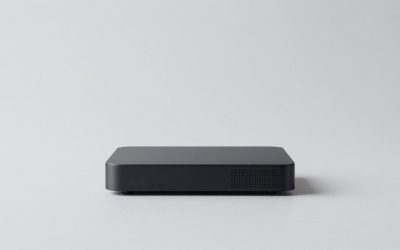
1. WiiM Pro AirPlay 2 Receiver, Google Cast Audio, WiFi Multiroom Streamer
The WiiM Pro is the smallest unit in this guide, and that is part of its appeal in a dedicated room. It is a puck-sized network streamer that turns an existing amplifier or pair of active speakers into a connected system, controlled entirely from the WiiM Home app. There is no screen and no front-panel knob, so it sits quietly on a shelf while the phone or tablet does the work.
Inside, a Burr-Brown PCM5121 DAC handles conversion up to 24-bit/192 kHz, with bit-perfect digital output available through coaxial or optical connections for listeners who prefer an external converter. The analog line out is volume-controlled, so the Pro can feed a power amplifier directly and act as the system preamp. AirPlay 2, Google Cast, Spotify Connect, TIDAL Connect, Qobuz Connect, Amazon Music casting, DLNA, and Roon Ready cover the major ways music reaches a room, and multiroom grouping works with Echo, Google Home, and other WiiM devices.
Listing features
- AirPlay 2 receiver and Google Cast Audio for streaming from iOS, Mac, and Android devices
- Gapless playback of hi-res audio up to 24-bit/192 kHz through digital and analog outputs
- Spotify Connect, TIDAL Connect, and Amazon Music casting built in
- Roon Ready endpoint with DLNA and NAS library support
- Room correction with 10-band graphic and parametric EQ in the WiiM Home app
- Volume-controlled analog line out plus coaxial and optical digital outputs
- Ethernet, dual-band Wi-Fi, and Bluetooth 5.1 connectivity
- Multiroom grouping with Echo, Google Home, and other WiiM devices
- USB Type-C power input
Considerations
- No balanced XLR output, so long cable runs to a power amplifier need care
- No front-panel display or volume knob; control depends on the app or voice assistant
- No analog input, so a turntable or CD player needs its own path into the amplifier
- The compact chassis and external power supply suit a shelf better than a component rack
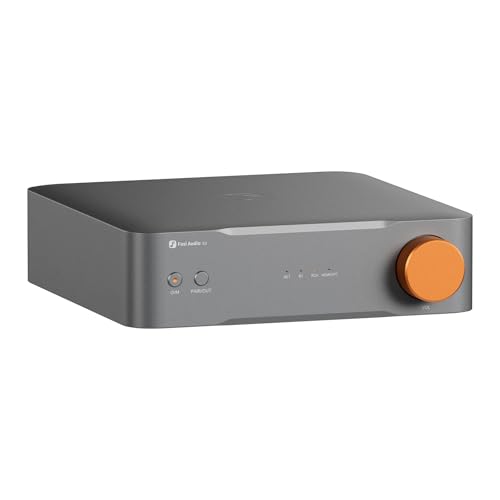
2. Fosi Audio S3 HiFi Music Streamer DAC Preamp
The Fosi Audio S3 is the first streamer from a brand known for compact amplifiers, and it arrives with the connection set of a much larger component. At its core is an AKM AK4493SEQ DAC with OPA1612 op-amps in a fully balanced circuit, feeding both XLR and RCA preamp outputs. That balanced output is the headline for a dedicated room: it lets the S3 drive a power amplifier over long cable runs with the noise rejection balanced lines are built for.
Streaming runs on an Amlogic A113X platform over Wi-Fi 6 and Bluetooth 5.3, with AirPlay 2, Spotify Connect, and TIDAL Connect among the supported protocols. HDMI eARC brings television audio into the system when the room doubles as a viewing space, and a dedicated subwoofer output with a 12V trigger helps integrate a sub into a two-channel setup.
Listing features
- AK4493SEQ DAC with OPA1612 op-amps in a fully balanced circuit design
- Balanced XLR and single-ended RCA preamp outputs
- Wi-Fi 6 and Bluetooth 5.3 wireless connectivity
- AirPlay 2, Spotify Connect, and TIDAL Connect support
- HDMI eARC input for television audio
- Dedicated subwoofer output with 12V trigger
- 5-band EQ through the companion app
- Optical and coaxial digital outputs for use as a digital transport
- Front-panel volume knob and included remote control
Considerations
- No front-panel display, so track information lives in the app
- No analog input, so analog sources need a separate preamp or a different input path
- A newer streaming platform than the established ecosystems in this guide, so app updates matter
- Compact size means the rear panel is dense; check cable clearance before racking
3. Eversolo DMP-A8 Music Streamer, DAP, DAC, Preamp
The Eversolo DMP-A8 is the full-size statement in this guide, built for a room where the source component is the centerpiece. A 6-inch touchscreen dominates the front panel, showing album art, VU meters, and a spectrum display, and a large volume knob sits beside it. Behind the screen is a dual AKM DAC pairing, the AK4191EQ and AK4499EX, with support for DSD512 and PCM up to 768 kHz at 32-bit.
What sets the A8 apart as a preamplifier is that it is a real one, not just a streamer with a volume control. Balanced XLR and RCA analog inputs accept a turntable preamp, a CD player, or another source, with up to 10 dB of analog gain, and the balanced XLR and RCA outputs feed a power amplifier or active speakers. Dual power supplies separate the analog and digital sections, and a parametric EQ with room correction is built in.
Listing features
- AK4191EQ and AK4499EX dual DAC chips with DSD512 and PCM 768 kHz/32-bit support
- Fully balanced analog preamp circuit with XLR and RCA inputs and outputs
- 6-inch touchscreen with VU meters, spectrum display, and album art
- Roon Ready with TIDAL Connect, Qobuz, Amazon Music, Apple Music, and Deezer
- Parametric EQ and room correction built in
- M.2 NVMe SSD slot for up to 4 TB of local music storage
- HDMI ARC input and I2S digital output over HDMI
- Dual power supplies with a linear supply for the analog section
- Bluetooth with aptX HD support
Considerations
- Full-size, heavy chassis needs a proper shelf or rack space with ventilation
- The depth of features means a longer setup and learning period than a simpler streamer
- No subwoofer output, so sub integration needs a crossover or a sub with high-level inputs
- The touchscreen and Android-based interface add complexity some listeners will not want
4. Bluesound Node Icon Hi-Res Wireless Multi-Room Music Streamer
The Bluesound Node Icon sits at the top of the Node line, and it is the streamer here most clearly designed around a multiroom home that still has one room set aside for serious listening. BluOS ties it to other Bluesound and BluOS players around the house, while the Icon itself is built to a higher standard than its siblings: dual-mono ESS Sabre ES9039Q2M DACs, one per channel, with MQA Labs QRONO d2a timing correction during conversion.
Balanced XLR outputs join the RCA pair, and a THX AAA headphone amplifier with a front headphone jack makes late-night listening in the room straightforward. A 5-inch full-color display shows album art and track information from across the room, and HDMI eARC brings television audio in when needed. Dirac Live room correction is available as a separate upgrade, which is worth knowing before planning the room setup.
The aluminum chassis is component-sized rather than puck-sized, so it sits naturally in a rack beside an amplifier. For a dedicated room in a house that already runs BluOS, or for a listener who wants balanced outputs, a screen, and a headphone stage in one box, the Icon covers more ground than any other single unit in this guide.
Listing features
- Dual-mono ESS Sabre ES9039Q2M DAC design with MQA Labs QRONO d2a processing
- Balanced XLR and single-ended RCA analog outputs
- THX AAA headphone amplifier with front-panel headphone output
- 5-inch full-color HD display showing album art and track information
- BluOS multiroom streaming with support for up to 64 players
- HDMI eARC input for television and gaming audio
- AirPlay 2, aptX Adaptive Bluetooth, and dual-band Wi-Fi
- DSD playback up to DSD256 from a local library
- Dirac Live room correction available as a separate upgrade
Considerations
- Dirac Live room correction is a separate upgrade rather than included
- BluOS is a closed ecosystem, so multiroom grouping works best with other BluOS players
- Component-sized chassis needs more shelf space than the compact streamers here
- No analog input, so analog sources need their own route into the system
How to Choose
Start with the amplifier. A power amplifier with balanced XLR inputs pairs naturally with the Fosi S3, the Eversolo DMP-A8, or the Bluesound Node Icon, and the balanced connection is worth having when the cable run from the rack to the amplifier is long. An amplifier with RCA inputs only works with any of the four, including the WiiM Pro, and keeps the system simpler.
Next, count the sources. If streaming is the only source, a compact unit with a strong app is enough, and the WiiM Pro or the Fosi S3 will do the job. If a turntable, CD player, or another analog source also lives in the room, the Eversolo DMP-A8 is the only unit here with analog inputs, and that alone can settle the choice. If television audio matters, look for HDMI eARC, which the Fosi S3 and the Bluesound Node Icon both carry.
Then think about control. A touchscreen on the component itself suits a room where the phone stays in a pocket, and the DMP-A8 and Node Icon both have one. An app-only unit suits a listener who is comfortable controlling everything from a phone or tablet, and the WiiM Pro and Fosi S3 both work that way. Voice control through Alexa, Google, or Siri is available on the WiiM Pro for listeners who want it.
Room correction deserves its own thought. A dedicated room is usually treated, but treatment does not remove every mode or reflection. Built-in room correction and parametric EQ, as found in the WiiM Pro and the Eversolo DMP-A8, let you shape the response from the listening position. The Node Icon offers Dirac Live as a separate upgrade, which is a capable path for listeners who want a guided measurement process. The Fosi S3 covers basic tonal shaping with its app EQ.
Finally, consider the library. Listeners with a large local collection should check how each unit handles it: the DMP-A8 takes an internal SSD, the WiiM Pro reads USB and network libraries, and BluOS handles local libraries through its app. Streaming-only listeners can ignore this entirely.
Fit and Installation Considerations
Place the streamer where its wireless signal stays strong. A dedicated room often has thick walls, acoustic treatment, and a rack full of metal, all of which can weaken Wi-Fi. Ethernet is the reliable answer when it is available, and every unit here except the compact WiiM Pro benefits from a wired connection if the room allows it. If Ethernet is not practical, keep the streamer near the room entrance or the access point side of the rack rather than buried behind other components.
Give the analog stage breathing room. Full-size units such as the DMP-A8 and the Node Icon generate heat and need ventilation above and behind them. Leave a clear gap above each component, keep power cables separated from analog interconnects where possible, and avoid stacking a warm amplifier directly on top of the streamer.
Match the output to the input. When connecting to a power amplifier, use the preamp outputs, not a fixed line output, and set the streamer to variable volume mode so its volume control governs the system. With active speakers, the same rule applies: the streamer is the volume control, so confirm the speakers are set to a sensible input level before the first playback. With balanced XLR connections, check that the pin wiring matches between the streamer and the amplifier, which is standard on the units in this guide but worth confirming on older amplifiers.
Set the volume ceiling before critical listening. A streamer feeding a power amplifier directly can deliver full output if the volume is accidentally pushed to maximum, so use any maximum-volume setting in the app to cap the level. This is a small step that protects both the speakers and the listener.
Plan the subwoofer path early. The WiiM Pro and the Fosi S3 both carry a subwoofer output with bass management, which makes integrating a sub straightforward. The DMP-A8 and the Node Icon need a different approach, such as a sub with its own crossover or high-level inputs, so check the subwoofer manual before committing.
Frequently Asked Questions
Do I need a separate preamplifier if I buy a streaming preamplifier?
No. A streaming preamplifier combines the streamer, the DAC, and the volume-controlled analog stage in one box, so it connects directly to a power amplifier or a pair of active speakers. A separate preamplifier only becomes useful when you need more analog inputs than the streamer provides, or when you want a specific analog character in the chain. In this guide, the Eversolo DMP-A8 is the only unit with analog inputs for other sources.
Can a streaming preamplifier drive passive speakers on its own?
No. A streaming preamplifier has no power amplifier stage, so it cannot drive passive speakers directly. It needs a separate power amplifier, an integrated amplifier used as a power amp, or active speakers with built-in amplification. The units in this guide are designed to sit in front of one of those, not to replace them.
Is a balanced XLR connection important in a listening room?
It helps most when the cable run between the streamer and the amplifier is long, or when the room has sources of electrical interference nearby. Balanced connections reject noise picked up along the cable, which is valuable in a rack with many components. For short runs in a quiet rack, a good RCA connection performs well. The Fosi S3, Eversolo DMP-A8, and Bluesound Node Icon all provide balanced outputs for listeners who want them.
How important is room correction in a dedicated listening room?
It is a useful complement to acoustic treatment, not a replacement for it. Treatment handles reflections and decay, while room correction addresses frequency response at the listening position, including low-frequency modes that panels alone may not fully tame. The WiiM Pro and the Eversolo DMP-A8 include room correction, and the Bluesound Node Icon supports Dirac Live as a separate upgrade. Measure from the listening seat and treat the correction as a final step after placement and treatment are settled.
Conclusion
The best streaming preamplifiers for dedicated listening rooms share one trait: they get out of the way. The WiiM Pro does it with a compact chassis and a strong app, the Fosi Audio S3 with balanced outputs and a serious DAC in a small box, the Eversolo DMP-A8 with a full-size preamp stage, analog inputs, and local storage, and the Bluesound Node Icon with dual-mono conversion, a display, and multiroom BluOS.
Match the unit to the system around it. Balanced inputs on the amplifier point toward the S3, the DMP-A8, or the Node Icon. Analog sources point toward the DMP-A8. A multiroom home points toward the Node Icon. A simple, app-driven room points toward the WiiM Pro. Get the outputs, inputs, and control method right, and the streamer disappears into the room, leaving only the music.
As an Amazon Associate, we earn from qualifying purchases.
More from Amazon
Programs that pair well with the guide above. Offers and eligibility are set by Amazon and may change.
Free shipping on eligible items, Prime Video and more. Eligible new members can start with a free trial.
Start a Prime free trialAd-free music streaming. Eligible new subscribers can start with a free trial.
Try Music Unlimited freeA Prime membership for ages 18-24 with a trial period. Eligibility is set by Amazon.
See Prime for Young AdultsAudiobooks and podcasts to listen to on the go. Eligible new members can start with a free trial.
Try Audible freeAs an Amazon Associate we earn from qualifying purchases.