Our Short List of 3
All 4 Picks at a Glance
| Product | Specs | Action |
|---|---|---|
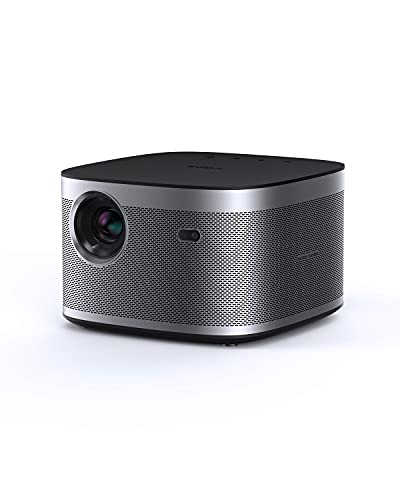 XGIMI HORIZON |
| Check price on Amazon |
 BenQ HT2060 |
| Check price on Amazon |
 Epson Home Cinema 1080 |
| Check price on Amazon |
 Epson EpiqVision Flex CO-FH02 |
| Check price on Amazon |
Key takeaways
- Mid-priced projectors compared on brightness, color and setup: four 1080p models that step up from budget units without reaching premium cost.
The mid-priced tier is where projectors stop being novelties and start being plausible replacements for a television. Below this band you mostly find dim portables and no-name units with optimistic specifications; above it you pay for native 4K panels, laser light engines, and lens hardware aimed at dedicated theater rooms. In between sits a group of 1080p machines that get the fundamentals right: enough brightness to hold a picture with a lamp on somewhere in the room, honest color, proper zoom lenses or automatic setup, and speakers that can carry a film without immediate help. The four projectors in this guide all live in that middle ground, and they divide it in four different directions.
As an Amazon Associate we earn from qualifying purchases.
One warning before the picks: mid-priced is a framing, not a fixed number, and street prices in this category move constantly with promotions. What stays stable is the specification step-up you are paying for. Every model here offers native 1920 x 1080 resolution, a light output figure measured in a recognized standard rather than an unqualified marketing number, and either a smart platform or the inputs to feed one. If a projector cannot say those three things plainly, it does not belong in this tier whatever its price tag claims.
What the middle tier buys you
Real brightness, honestly measured. Budget projectors often quote “lumens” without a standard behind the number. The models here quote ANSI, ISO, or color-and-white brightness figures from 1,500 up to 3,400 lumens, which translates into a picture that survives a shaded room and fills a 100-inch screen without looking washed out. That is the single biggest practical jump from the budget tier.
Color you can trust. A mid-priced projector should cover the Rec.709 standard used by film and broadcast, and the better ones reach further into the DCI-P3 cinema gamut. 3LCD models avoid the rainbow artifacts some viewers see on single-chip DLP, while LED light sources hold their color and brightness far longer than a lamp and never need a replacement bulb budget.
Placement flexibility. At this level you should expect at least one of three things: an optical zoom lens, vertical lens shift, or a genuinely capable automatic setup routine with autofocus and keystone correction. These features decide whether the projector fits your room or your room has to be rearranged around the projector.
Sound and streaming that finish the job. Dual speakers in the five-to-eight-watt range will not replace a soundbar, but they make the projector usable on its own. A built-in smart platform removes the need for a separate streaming stick, though a projector without one is not disqualified: an HDMI port and a stick you already own achieve the same result.
The picks
XGIMI HORIZON
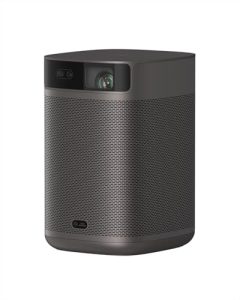
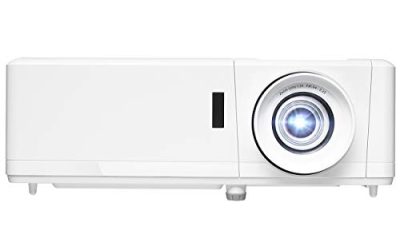
The HORIZON is the convenience pick of this tier: a compact smart projector that behaves like a television with a very large screen. XGIMI rates its LED light engine at 1,500 ISO lumens with a native 1920 x 1080 picture and support for 4K input signals. Android TV 10.0 is built in, so the major streaming apps, Chromecast casting, and voice search are all on board without extra hardware, and the dual Harman Kardon speakers are strong enough that many owners will never connect anything else.
Setup is the headline feature. The HORIZON’s Intelligent Screen Adaption combines autofocus, auto keystone correction, obstacle avoidance, and screen alignment, so moving the unit from a coffee table to a bedroom dresser is a matter of switching it on and letting it square the picture itself. There is no optical zoom or lens shift, and the brightness sits at the lower end of this group, so a darkened room and a screen around 100 inches is its natural habitat. Within that habitat it is the least fussy projector here, and the one most likely to be used daily rather than saved for movie nights.
BenQ HT2060
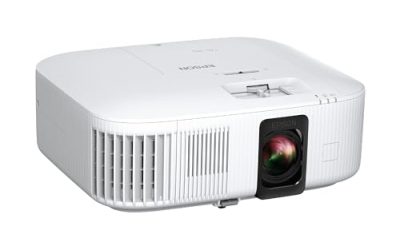
The HT2060 is the picture-quality pick, built for a fixed spot in a darkened room rather than life on the move. Its LED light source is rated at 2,300 ANSI lumens with a native 1080p picture, HDR support, and color coverage that BenQ specifies at 98 percent of Rec.709 and full DCI-P3 wide-gamut support, which is cinema territory rather than living-room compromise. The LED source also means no lamp replacements and consistent brightness over a long rated life.
What separates the HT2060 from the smart projectors here is its lens hardware: a 1.3x optical zoom and vertical lens shift, features that let you fine-tune image size and position without moving the projector or resorting to digital keystone correction that softens the picture. Two-dimensional keystone is still available when the placement demands it. Gamers are looked after as well, with a low-latency mode quoted at 8.3 milliseconds at 120 Hz input, and the built-in dual 5-watt speakers, S/PDIF output, and HDMI 2.0 ports cover both standalone use and connection to a proper audio system. There is no built-in streaming platform, so budget a thought, if not much else, for a streaming stick. For film-first buyers in this tier, that is a small toll for the best lens and color package here.
Epson Home Cinema 1080
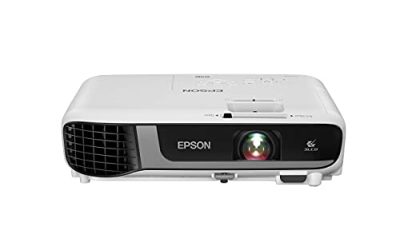
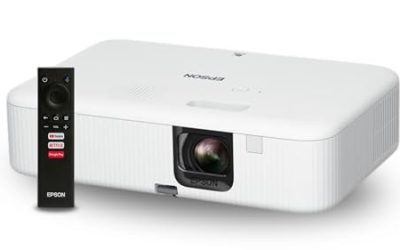
The Home Cinema 1080 is the brightness pick, and it is not close. Epson rates its 3LCD light engine at 3,400 lumens of both color and white brightness, which means the full output applies to color images rather than only to white test patterns. In practice that output lets this projector hold a watchable picture in a room with ordinary ambient light, handle larger screens, and shrug off the brightness loss that comes with zooming the lens. The 3LCD design also means no rainbow artifacts for viewers who are sensitive to them.
The specification sheet is workmanlike in the best sense: a native 1080p picture, a contrast ratio rated at up to 16,000:1, dual HDMI inputs, an auto picture skew sensor that corrects the image when the projector sits at an angle, and a built-in speaker adequate for casual use. There is no smart platform built in, and the fan and lamp-based design belong to an earlier generation of home projectors, so lamp replacement eventually enters the ownership picture in a way it does not with the LED models. None of that changes the central fact: if your room cannot be fully darkened, or your screen ambitions run past 120 inches, this is the mid-priced projector whose brightness solves the problem the others work around.
Epson EpiqVision Flex CO-FH02
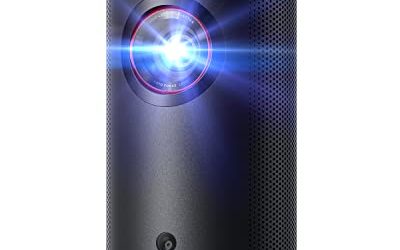
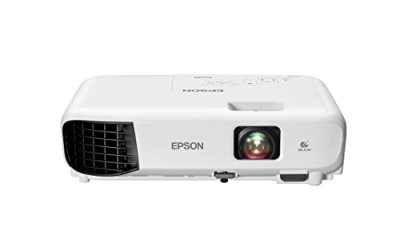
The CO-FH02 takes Epson’s 3LCD brightness formula and puts it in a portable, streaming-ready body. It is rated at 3,000 lumens of color and white brightness with a native 1080p picture, and unlike its Home Cinema sibling it carries Android TV built in, so Netflix-class streaming apps, Google Assistant, and Chromecast are available the moment it connects to Wi-Fi, with a 5-watt built-in speaker for sound. The design is a simple, clean slab intended to move between a living room, a classroom, and a backyard without ceremony.
The compromises are placement and refinement. There is no lens shift and only basic keystone correction, the contrast performance is tuned for versatility rather than black-level depth in a dark theater, and the single speaker is a convenience rather than a cinema feature. What you get in exchange is the most flexible machine in this group: bright enough for a lit room, smart enough to need nothing else plugged in, and portable enough to justify its place in a cupboard rather than a ceiling mount. For households that want one projector to serve films, sports in a bright room, and the occasional presentation, the CO-FH02 covers more bases than any other pick here.
Which mid-priced projector fits which room
Pick the XGIMI HORIZON if the projector will live on a table, move between rooms, and serve everyday streaming in a room you can darken; its automatic setup and built-in Android TV make it the easiest machine here to live with. Pick the BenQ HT2060 if it will sit in one place in a dark room and film quality leads the decision; the zoom, lens shift, LED source, and wide color gamut are a combination nothing else in this tier matches. Pick the Epson Home Cinema 1080 if ambient light is the enemy, because its 3,400-lumen output is the straightforward answer. Pick the Epson CO-FH02 if one bright, portable, self-contained unit has to cover several jobs in several rooms.
Placement and setup advice for this tier
Mid-priced projectors reward a few minutes of placement thought. If your model has optical zoom or lens shift, as the HT2060 does, use the lens before you touch keystone correction: optical adjustments keep every pixel of the 1080p panel working, while digital keystone throws resolution away to square the image. With the automatic models, give the autofocus a plain, well-lit wall or screen to read, and re-run the routine after the projector warms up if the picture looks soft at the edges.
Brightness headroom is best spent on screen size rather than on fighting sunlight. All four projectors look their best on a matte white or light gray screen in a room with the curtains drawn; the two Epsons simply forgive you when that is not possible. For sound, every model here benefits from an external speaker for film nights, but the HORIZON’s Harman Kardon pair and the HT2060’s dual speakers are presentable on their own, while the Epsons are better paired with a Bluetooth or wired speaker when the room fills up.
Finally, think about the light source as a running-cost decision. The LED engines in the HORIZON and HT2060 are rated for tens of thousands of hours and effectively remove lamp replacement from ownership. The lamp-based Home Cinema 1080 will eventually need a replacement lamp, which is a modest, predictable cost, but it belongs in the comparison if the projector will run daily for years.
Frequently asked questions
Is 1080p enough, or should this budget go toward 4K? At screen sizes up to about 120 inches and normal viewing distances, a good 1080p projector with strong color and contrast looks convincingly sharp, and the money saved over native 4K buys brightness and lens quality that matter more in most rooms. The HORIZON also accepts 4K signals and scales them to its panel.
DLP, LED, or 3LCD: which technology should I choose? Choose by weakness rather than strength. If rainbow artifacts bother you, 3LCD models such as the two Epsons avoid them entirely. If long light-source life and compact size matter, the LED DLP models from XGIMI and BenQ lead. All four technologies here produce a good picture when the room cooperates.
Do I need a screen, or is a wall enough? A smooth white wall works, and every pick here can correct for modest placement angles. A basic matte screen still improves brightness uniformity and contrast, and it gives autofocus and screen-alignment systems a clean target. It is the cheapest picture upgrade available at any tier.
Can these projectors handle gaming? The HT2060 is the clear gaming pick, with a quoted low-latency mode of 8.3 milliseconds at 120 Hz. The others are fine for casual and family gaming but are not specified with competitive play in mind.
What does “mid-priced” actually get me over a budget projector? Measured brightness you can rely on, native 1080p across the board, better color coverage, some form of serious placement flexibility, and speakers and platforms that do not need immediate supplementation. It is the tier where the compromises stop being structural.
The bottom line
The mid-priced tier is the sensible center of the projector market, and these four models mark its corners. The XGIMI HORIZON is the effortless smart option, the BenQ HT2060 is the film enthusiast’s instrument, the Epson Home Cinema 1080 is the brightness answer for real rooms, and the Epson CO-FH02 is the versatile all-rounder that streams on its own. Decide which problem your room actually has, light, placement, or convenience, and the right pick from this list follows directly from the answer.
More from Amazon
Programs that pair well with the guide above. Offers and eligibility are set by Amazon and may change.
Free shipping on eligible items, Prime Video and more. Eligible new members can start with a free trial.
Start a Prime free trialAd-free music streaming. Eligible new subscribers can start with a free trial.
Try Music Unlimited freeA Prime membership for ages 18-24 with a trial period. Eligibility is set by Amazon.
See Prime for Young AdultsAudiobooks and podcasts to listen to on the go. Eligible new members can start with a free trial.
Try Audible freeAs an Amazon Associate we earn from qualifying purchases.