Key takeaways
- Small bedroom or occasional use: Choose Roku Streaming Stick 4K. Its low-profile design and simple interface are more valuable than extra storage.
- Main living-room TV used every day: Choose Apple TV 4K or Google TV Streamer. A responsive interface saves time across hundreds of sessions.
- TV far from the router: Prefer a player with Ethernet, such as Google TV Streamer, Apple TV 4K 128GB, or Nvidia Shield TV Pro. A wired connection is usually more dependable than upgrading from Wi-Fi 5 to Wi-Fi 6E at the player.
- Several inexperienced users: Roku is easiest to teach. Its consistent grid and uncomplicated search reduce accidental menu changes.
- Smart-home and voice-control household: Fire TV Stick 4K Max suits Alexa users; Google TV Streamer suits Google Assistant users; Apple TV fits Apple Home users.
- Large app collection or frequent app switching: Apple TV’s fast processor and Google TV Streamer’s 32GB storage are preferable to a basic stick.
The best streaming media players for most people are the Google TV Streamer (4K) for an easy all-round experience, Apple TV 4K for the fastest interface and best remote responsiveness, Roku Streaming Stick 4K for simple low-cost streaming, and Fire TV Stick 4K Max for strong Wi-Fi performance and Alexa integration.
Our top picks
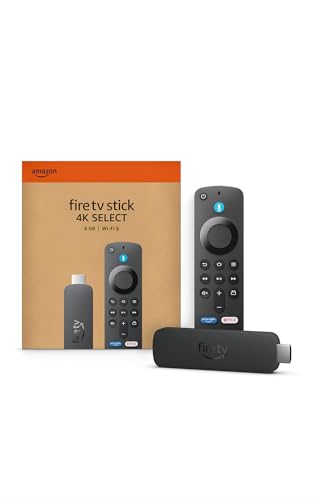

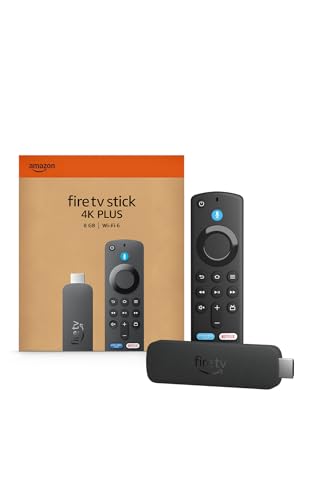
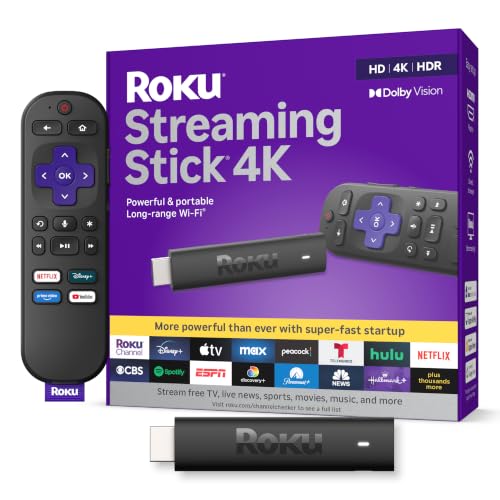
As an Amazon Associate we earn from qualifying purchases at no extra cost to you. Ratings are shown as listed on Amazon.
Quick picks by situation
| Your priority | Best choice | Why it fits |
|---|---|---|
| Fastest, least cluttered experience | Apple TV 4K | Very responsive menus, long software support, excellent app quality, and a precise remote |
| Best all-round Google-connected player | Google TV Streamer (4K) | 4K HDR, 32GB storage, Google Assistant, smart-home controls, and built-in Ethernet |
| Simple streaming on a budget | Roku Streaming Stick 4K | Clear menus, broad app support, compact design, and an approachable remote |
| Weak or crowded Wi-Fi | Fire TV Stick 4K Max | Wi-Fi 6E support, Dolby Vision, and a responsive interface when paired with a compatible router |
| Local media and advanced playback | Nvidia Shield TV Pro | USB storage support, Ethernet, broad codec compatibility, and powerful media-server features |
Head-to-head: the important differences
| Player | 4K and HDR | Storage | Network connection | Approx. size and weight | Remote and voice control |
|---|---|---|---|---|---|
| Apple TV 4K (3rd generation) | 4K, Dolby Vision, HDR10+, HDR10, HLG | 64GB or 128GB | Wi-Fi 6; Gigabit Ethernet on 128GB model | 93 × 93 × 31mm; 208–214g | Siri Remote with clickpad, USB-C charging, Siri |
| Google TV Streamer (4K) | 4K, Dolby Vision, HDR10+, HDR10, HLG | 32GB | Wi-Fi 5; Gigabit Ethernet | 162 × 61 × 13mm; about 160g | Voice Remote with Google Assistant and customizable buttons |
| Roku Streaming Stick 4K | 4K, Dolby Vision, HDR10+, HDR10, HLG | Internal storage not user-expandable | Dual-band Wi-Fi 5 | 95 × 21 × 12mm; about 26g | Voice Remote with TV controls and voice search |
| Fire TV Stick 4K Max (2nd generation) | 4K, Dolby Vision, HDR10+, HDR10, HLG | 16GB | Wi-Fi 6E | 99 × 30 × 14mm; about 44g | Alexa Voice Remote Enhanced with shortcut buttons |
| Nvidia Shield TV Pro | 4K, Dolby Vision, HDR10, HLG | 16GB; two USB ports for expansion | Wi-Fi 5; Gigabit Ethernet | 159 × 98 × 26mm; about 250g | Backlit remote with voice search and Google Assistant |
All five support 4K output, but the television must also support the relevant HDR format. Dolby Vision and HDR10+ are not interchangeable: a TV may support one, both, or neither. The player normally falls back to HDR10 when a particular format is unavailable.
Apple TV 4K: the best choice for speed and polish
Apple TV 4K is the strongest pick when interface speed, consistent app quality, and a clean design matter more than the lowest price. Its A15 Bionic chip makes opening apps, switching menus, and scrubbing video feel quicker than on most inexpensive sticks. The 128GB version also adds Gigabit Ethernet, useful for high-bitrate local files or a congested wireless network.
The Siri Remote is compact and rechargeable over USB-C. Its clickpad supports directional navigation, while the side jog-wheel function can make precise scrubbing easier once learned. The main drawback is that the remote has relatively few dedicated buttons. Adjusting subtitles, audio tracks, or live-TV functions may require on-screen controls or Siri.
Apple TV is especially attractive for households already using iPhones, AirPods, HomePods, or Apple’s TV app. Its market price is usually higher than a streaming stick, but the box is a better long-term choice for daily use because it receives substantial software updates and does not depend on a television’s slow built-in processor.
Google TV Streamer: the best balanced upgrade
Google TV Streamer (4K) is a practical middle ground. Its home screen brings recommendations from multiple services into one interface, while the Apps-only mode reduces some of that aggregation for people who prefer a simpler layout. Google Assistant voice search can find a film, launch an app, answer basic questions, or control compatible smart-home devices.
Its 32GB storage is generous for installed apps, and the built-in Gigabit Ethernet port is a useful advantage over most HDMI sticks. The box sits behind or below the TV rather than hanging from an HDMI socket, so it needs more visible shelf or cabinet space. The Voice Remote includes a customizable button, which is more useful than a remote with only generic shortcuts if the household repeatedly uses the same service.
Choose it over Apple TV when you prefer Google Photos, Google Assistant, Android-connected services, or a more recommendation-heavy home screen. Choose Apple TV instead if maximum animation speed and a less promotional interface are your top concerns.
Roku Streaming Stick 4K: the easiest interface to learn
Roku’s main advantage is clarity. The app grid is easy to understand, search works across supported services, and the system avoids the learning curve associated with more densely featured platforms. It is a good choice for occasional viewers, guest rooms, and households that want fewer settings.
The Streaming Stick 4K supports Dolby Vision and HDR10+, and its dual-band Wi-Fi 5 is sufficient for normal 4K streaming when the router is reasonably close. It is powered from USB, so some televisions may require the included wall adapter if their USB port cannot supply enough power.
Its compact design is convenient, but a stick has less room for cooling and processing hardware than a larger box. That does not prevent ordinary streaming, although a dedicated box can feel more comfortable when switching between many apps or maintaining a large app library. Roku’s remote is straightforward, but service shortcut buttons may not match the services everyone uses.
Fire TV Stick 4K Max: best for Alexa and difficult wireless setups
Fire TV Stick 4K Max is the most technically capable stick in this group. Wi-Fi 6E can reduce congestion if the home router and network setup also support the 6GHz band. In practice, the benefit depends on distance and walls: 6GHz often offers lower interference but shorter range than 5GHz.
The interface is quick enough for regular navigation, and Alexa voice search is convenient for finding titles, opening apps, checking weather, and controlling compatible devices. Dolby Vision and HDR10+ support cover the main premium HDR formats.
The trade-off is a busier home screen, with recommendations and sponsored content taking substantial space. It is a good match for Alexa households and people whose router is in a crowded apartment environment. It is less appealing if you want a minimal, neutral app launcher.
Nvidia Shield TV Pro: for local files and advanced users
The Shield TV Pro remains a specialist choice rather than the default streaming recommendation. It has Gigabit Ethernet, two USB ports, expandable storage options, and features such as AI-enhanced upscaling for compatible content. Those capabilities suit users who maintain a Plex server, play files from network storage, or need broader control over codecs and playback.
For ordinary subscription streaming, its older hardware platform and higher price make Apple TV 4K or Google TV Streamer easier recommendations. It also supports Dolby Vision and HDR10 but not HDR10+, so owners of an HDR10+-focused television may prefer another player.
How to choose based on your room and viewing habits
- Small bedroom or occasional use: Choose Roku Streaming Stick 4K. Its low-profile design and simple interface are more valuable than extra storage.
- Main living-room TV used every day: Choose Apple TV 4K or Google TV Streamer. A responsive interface saves time across hundreds of sessions.
- TV far from the router: Prefer a player with Ethernet, such as Google TV Streamer, Apple TV 4K 128GB, or Nvidia Shield TV Pro. A wired connection is usually more dependable than upgrading from Wi-Fi 5 to Wi-Fi 6E at the player.
- Several inexperienced users: Roku is easiest to teach. Its consistent grid and uncomplicated search reduce accidental menu changes.
- Smart-home and voice-control household: Fire TV Stick 4K Max suits Alexa users; Google TV Streamer suits Google Assistant users; Apple TV fits Apple Home users.
- Large app collection or frequent app switching: Apple TV’s fast processor and Google TV Streamer’s 32GB storage are preferable to a basic stick.
Setup details that affect streaming quality
- Check the HDMI port. For 4K HDR, use a TV port and cable rated for the required bandwidth. Older HDMI ports may limit resolution or HDR.
- Use the correct power supply. A streaming stick connected to an underpowered TV USB port can restart, lose Wi-Fi, or show warnings. Use the supplied wall adapter when possible.
- Enable automatic display matching. This allows the player to switch between SDR, HDR10, and Dolby Vision instead of forcing every program into one mode.
- Test the network at the TV location. A 4K stream commonly needs roughly 15–25 Mbps of sustained service bandwidth, but stability matters as much as the headline speed.
- Place the device in open air. Do not bury a box under other electronics or wrap a stick in cable bundles. Heat can cause sluggish menus and intermittent playback.
Ownership realities and common mistakes
Remotes usually wear out before the streaming hardware. Buttons become less responsive, batteries or rechargeable cells lose capacity, and dropped remotes can damage the click mechanism. Keep the remote away from drinks and use voice search sparingly if you want to preserve button life. Rechargeable Apple TV remotes need periodic charging; replaceable-battery remotes are easier to revive immediately.
Streaming devices also accumulate unused apps and cached data. Removing services no longer used can free storage and reduce background maintenance. Restarting the player occasionally can clear temporary glitches, but repeated buffering is more often caused by weak Wi-Fi, an overloaded router, an underpowered USB port, or a service outage—not by a need to buy a new HDMI cable.
As a general market guide, basic 4K sticks commonly cost about $30–$70, mid-range 4K boxes about $80–$130, and specialist premium players roughly $150–$250. The best value depends on how often the device is used: paying more for a fast, well-supported box is easier to justify for a main television used several hours a day, while a guest-room TV may need only Roku’s simple interface and reliable 4K HDR output.